
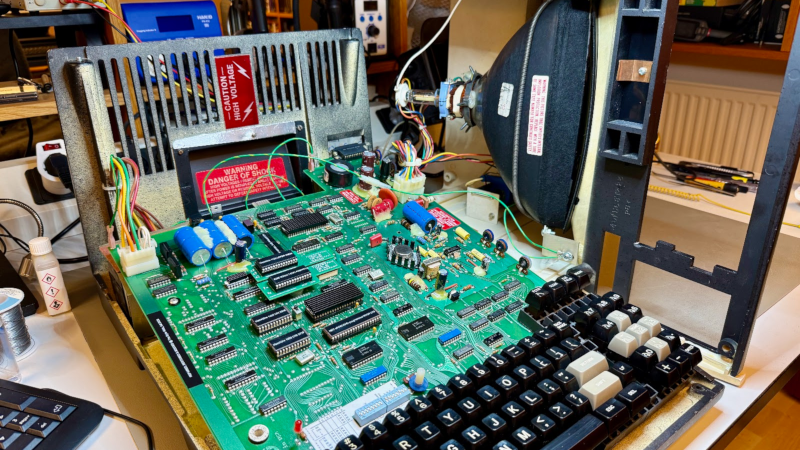
The Hazeltine 1420 Terminal Restoration Unveiled
The journey to revive a vintage Hazeltine 1420 terminal showcases the persistent challenges and ingenuity involved in breathing new life into 1980s computing hardware. This project delves into the complexities of restoring a device that was once a crucial interface for early microcomputers.
Table of Contents
Upon initial inspection, the Hazeltine 1420 terminal presented a common array of issues for hardware of its era. Suspect capacitors were a primary concern, a frequent culprit in the degradation of electronic components over decades. Furthermore, a missing power transistor suggested that the unit may have been cannibalized for parts to repair another device.
Modernizing the Hazeltine 1420 Power Supply
A key objective of this restoration was to upgrade the terminal’s power supply. Original linear regulators generated significant heat, posing a risk to other components. The plan involved integrating modern switching regulators to improve efficiency and reduce thermal stress on the Hazeltine 1420 terminal’s internal circuitry.
Scorch marks found near the bridge rectifiers indicated that the power supply was a major point of failure. These visible signs of overheating underscored the necessity of a robust power solution. The potential for unobtainable custom chips, such as those holding character sets, added another layer of urgency to the repair efforts.
Preserving Legacy Logic with Modern Solutions
The scarcity of critical, hard-to-replace chips posed a significant hurdle. The restorers aimed to read the data from these vital components, with the foresight to design modern replacements should they fail. This proactive approach ensures the long-term viability of the Hazeltine 1420 terminal, even if original parts become irretrievable.
While the original ROMs were found to be functional, their inherent fragility and the difficulty of sourcing replacements led to their careful storage. They were ultimately replaced by an adapter board populated with contemporary components, safeguarding the terminal’s operational status.
The Evolving Landscape of Early Computing
The restoration of the Hazeltine 1420 terminal also sparks reflection on the early days of personal computing. Unlike today’s highly integrated systems, users often had to select compatible terminals, with brands like Lear Siegler, ADDS, TeleVideo, and Hazeltine vying for market share. This era saw a blend of enthusiast-built kits and commercially produced machines.

The evolution from early 8-bit systems to the IBM PC in 1981 marked a significant shift. While the initial IBM PC was rudimentary by modern standards, its open architecture paved the way for the vast ecosystem we see today. This transition highlights how platforms like the IBM PC, and its numerous compatibles such as the Olivetti M24, gradually became the dominant force in the market.
The development of graphics cards like the Hercules card, which combined text and graphics capabilities, and the eventual introduction of sound cards, transformed the PC into a more versatile machine. This progression mirrors how modern hardware, like AMD’s EPYC Embedded 9006 processors, pushes the boundaries of performance and capability in today’s computing landscape.
The challenges faced in restoring the Hazeltine 1420 terminal are a testament to the engineering prowess of its time and the dedication required to preserve these technological artifacts. It underscores the importance of understanding the foundational elements of computing history.
Source: Hackaday Engineering