Smaller Tankers Emerge as Critical Link in Hormuz Oil Trade
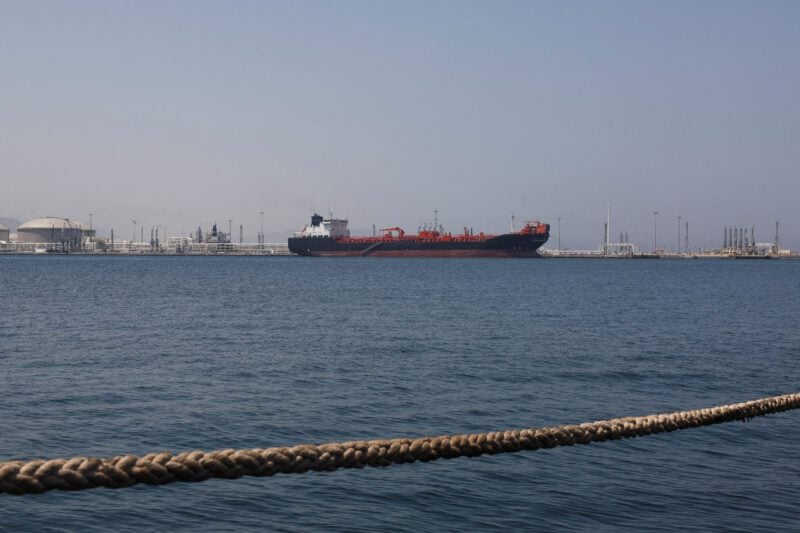
The global oil trade through the Strait of Hormuz is increasingly relying on smaller tankers to maintain export volumes amidst escalating geopolitical tensions. This strategic shift sees Suezmax and Aframax vessels playing a more prominent role, compensating for the reduced availability of supertankers targeted in recent attacks. The adaptation underscores the resilience of maritime logistics in navigating complex international conflicts and ensuring continued energy supply.
Table of Contents
Vortexa data reveals a significant increase in oil volumes transported by Suezmaxes and Aframaxes through the vital waterway over the past two months. October marked a wartime high, with these vessels moving over 2 million barrels daily. This surge contributed to overall daily exports reaching 11.4 million barrels, the highest figure recorded since the conflict’s inception.
The Evolving Landscape of Hormuz Shipping
Historically, the lucrative yet perilous trade route through the Persian Gulf has been dominated by Very Large Crude Carriers (VLCCs), capable of carrying up to 2 million barrels. According to BRS Shipbrokers, VLCCs constitute 72% of vessels transiting Hormuz. However, their prominence has been challenged as Iranian attacks have rendered some of these massive ships inoperable, necessitating alternative solutions.
Shipbrokers and traders confirm that the increased deployment of Suezmaxes and Aframaxes has been instrumental in sustaining robust Gulf export levels. These vessels, each carrying less than half the capacity of a VLCC, are primarily utilized for loading crude from Iraq, Kuwait, and Qatar. Their operational flexibility allows for efficient cargo transfer to other vessels in the Gulf of Oman or direct transit to destinations, frequently including ports in India.
Hardware and Operational Adaptations
Vessels like the Suezmax tanker Lucia A are pioneering this new trade dynamic. Ship-tracking data indicates that since June, the Lucia A has successfully completed at least five cargo transfers, loading crude from Iraq and delivering it to waiting ships in the Gulf of Oman or to the Egyptian port of Ain Sukhna on the Red Sea.
Another Suezmax, the Ture, has also demonstrated its utility, recently collecting its third Iraqi cargo. This vessel has a prior history of transporting crude from Russia’s western ports to India, a trade permitted under the G7’s price-cap guidelines, provided the oil adheres to the stipulated pricing mechanisms. The successful integration of these smaller tankers demonstrates a pragmatic response to supply chain disruptions.
Economic Trade-offs and Engineering Limitations
Beyond operational necessity, the adoption of smaller tankers presents significant economic advantages. Freight costs are considerably lower compared to supertankers, whose rates have surged disproportionately since the conflict began. Shipbrokers report that the rate for a Suezmax traveling from the Persian Gulf to China is currently assessed at approximately one-third to just under half the benchmark rate for a VLCC on the same route.
While these smaller tankers offer cost efficiencies and increased availability, their reduced carrying capacity means more voyages are required to transport equivalent volumes of oil. This necessitates a more complex logistical orchestration and potentially longer overall transit times for large-scale export targets. The engineering trade-off involves balancing the risk of supertanker attacks against the logistical demands of a higher frequency of smaller vessel movements.

Field Readiness and Future Outlook
The current operational tempo suggests that the use of smaller tankers is not merely a temporary measure but a strategic adaptation to the ongoing challenges in the Strait of Hormuz. The ability of these vessels to load, transfer, or deliver crude efficiently highlights the industry’s capacity for rapid recalibration in response to external pressures.
This evolving trade pattern is occurring against a backdrop of broader technological shifts in global logistics. For instance, the development of advanced electric vehicles, such as the Greenworks OPTIMUS UTV, showcases how engineering innovations are driving efficiency and range in various transport sectors. Similarly, the maritime industry’s response with smaller tankers demonstrates a similar drive for practical, effective solutions in challenging environments. The continued flow of oil through Hormuz, facilitated by these adaptable vessels, is critical for global energy markets.
The successful integration of smaller tankers into the Hormuz shuttle trade is a testament to the maritime industry’s agility. As geopolitical situations evolve, the deployment of these vessels ensures a degree of stability in oil exports, proving that innovation and adaptation are key to maintaining critical supply chains. The strategic use of smaller tankers continues to be a vital component of the region’s energy logistics.
© 2026 Bloomberg L.P. Source