
New York Boosts Offshore Wind Infrastructure with $230M Grant Initiative
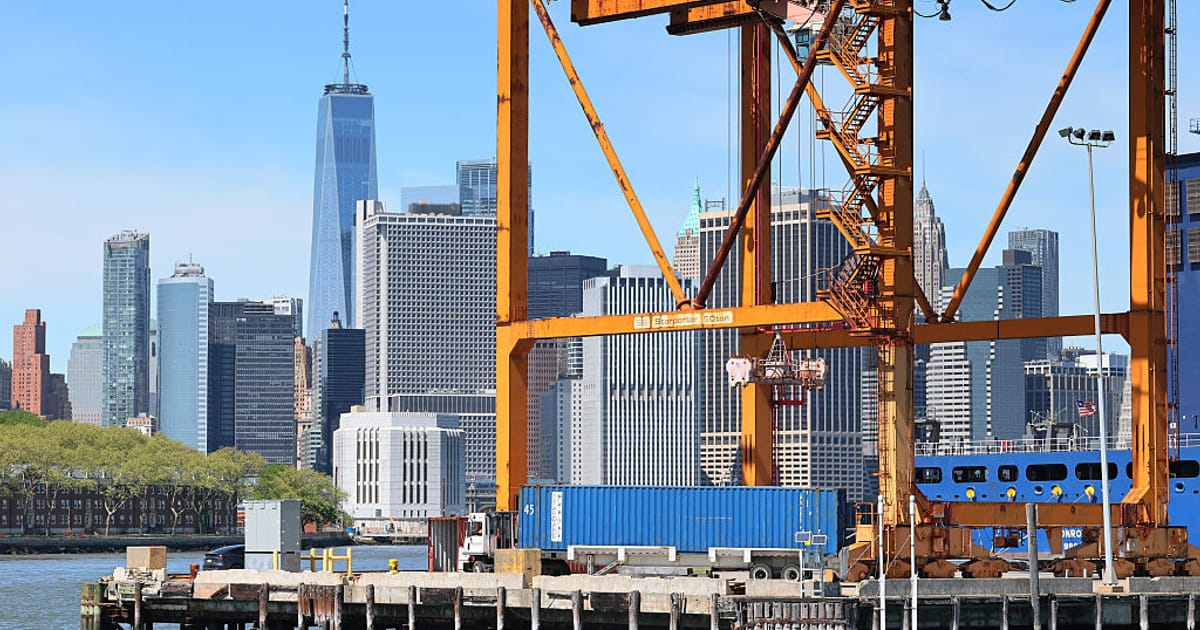
New York State is making a significant strategic investment in its maritime infrastructure, awarding over $230 million in repurposed grants to five key projects. This initiative aims to prepare the state’s ports for a potential resurgence in U.S. offshore wind development. The funding is designed to enhance cargo-handling capacity, deploy heavy-lift equipment, and expand manufacturing capabilities, providing immediate economic benefits and job creation.
Table of Contents
Doreen Harris, president and CEO of the New York State Energy Research Development Authority (NYSERDA), emphasized that these are long-term investments in robust infrastructure. “Port facilities and their upgrades tend to be capital-intensive, they tend to have long lead times. So our investments today are long-term in nature,” Harris stated. She further noted that the projects represent strong infrastructure development for New York, regardless of their ultimate application.
Repurposed Funding Fuels Maritime Modernization
The $230 million in grants originates from $200 million initially earmarked for offshore wind manufacturing and logistics, which has now been broadened to encompass general maritime infrastructure. This funding is part of a larger $500 million initiative announced by Governor Kathy Hochul in 2022, during a more optimistic period for the offshore wind sector.
New York’s ambitious 2019 target was to develop 9 gigawatts of offshore wind capacity by 2035, a goal intended to significantly contribute to the state’s decarbonization efforts. A crucial component of this strategy involved transforming ports into hubs for the manufacturing, assembly, and servicing of offshore wind turbines. However, economic challenges and supply chain disruptions have impacted previous projects, such as the planned turbine component facilities at the Port of Coeymans and Port of Albany.
Addressing Challenges and Future-Proofing Ports
The current administration’s policies have created significant federal policy uncertainty, making it increasingly unlikely that New York will meet its 9 GW offshore wind target within the next decade. Despite these headwinds, state officials are committed to adapting their planning. “We certainly have had to adjust our planning to reflect the realities of the day,” Harris acknowledged, citing the “illegal and unprecedented” challenges facing the industry.
The awarded grants are strategically allocated to maximize utility. The Port of Coeymans will receive $100 million for a new heavy-lift wharf and expanded industrial operations. The Port of Albany is slated to receive $94.8 million to redevelop Beacon Island into a multi-use marine terminal capable of handling ultra-heavy cargo. These upgrades are vital for supporting large-scale industrial projects, similar to how advanced computing infrastructure, like the NVIDIA RTX Spark, unlocks local generative workflows, these port upgrades unlock new logistical capabilities.
Specific Project Allocations and Scope
Further investments include $16.7 million for Derecktor Shipyards in Mamaroneck to build and maintain vessels for various maritime uses, including offshore wind. Kalypso Offshore in Brooklyn secured $11.8 million for a subsea cable operations and maintenance hub. Ionic Order received $5 million to expand its waterfront facility for producing precast concrete products, essential for robust marine construction.

NYSERDA also plans to issue additional awards for port upgrades statewide and is soliciting proposals for predevelopment activities. These include community outreach and transmission-interconnection studies, laying the groundwork for future renewable energy projects. This forward-looking approach ensures that New York’s offshore wind infrastructure remains a priority, even amidst current industry volatility.
Field Readiness and Long-Term Outlook
While New York currently has one operational offshore wind farm, South Fork Wind (132 MW), and expects to add significant capacity from Empire Wind and Sunrise Wind next year, the broader U.S. offshore wind pipeline faces considerable uncertainty. The long lead times for offshore wind projects, often a decade or more, mean that substantial policy shifts would be required for new farms to advance before 2035.
Despite these challenges, the state’s commitment to offshore wind remains firm for the mid- and long-term. The substantial investment in port infrastructure underscores this dedication. These modernized ports are not solely reliant on offshore wind; they are versatile assets that can support a range of maritime activities and heavy industries, ensuring their economic viability and strategic importance for years to come.
Source: Canary Media Clean Energy Tech