
US Imposes New Tariffs Citing Overcapacity Concerns
The United States has announced significant new tariff plans targeting China, the European Union, and over a dozen other economies. This move is part of an effort to reinstate broad import taxes, following a Supreme Court ruling that previously found such measures unconstitutional. The core justification cited by the U.S. administration is the issue of overproduction in key domestic industries, which is alleged to be harming American companies.
Table of Contents
Initial reports indicate that tariffs on imports from China could rise to 20%, aligning with a previous agreement. However, this rate carries the potential to double to 40% should ongoing trade negotiations between the two nations falter. For goods originating from the EU, the proposed tariff rate stands at 15%, in accordance with existing agreements, with a possibility of escalation to 20%.
Economic Ramifications and Trade Policy Shifts
These impending tariffs are a direct consequence of a probe initiated in March concerning alleged excess manufacturing capacity. The administration is leveraging Section 301 of the Trade Act of 1974, a legal framework considered more resilient to challenges than previous tariff implementations. The proposed rates are designed not to exceed levels already established in existing trade agreements with the affected economies.
The announcement comes at a politically sensitive time, following recent midterm election results where economic concerns played a significant role. While initial reactions from China and the EU have been measured, the potential for retaliatory measures remains a key consideration. China’s Foreign Ministry has characterized the prospect of new tariffs as “political maneuvering,” emphasizing the need for collaborative efforts to maintain trade stability.
The EU has firmly rejected the premise that Europe is a source of structural overcapacity, asserting expectations that any new levies will adhere to the existing tariff agreement. U.S. Trade Representative Jamieson Greer stated that the new duties are intended to preserve current deals while addressing overcapacity issues, suggesting that many of these agreements already incorporate solutions for excess capacity.
Specifics of the Tariff Implementation and Exemptions
Imports from prominent trading partners such as Japan, South Korea, and Switzerland are slated for a 15% tariff. These rates could potentially increase to 25% for South Korea and 20% for Japan and Switzerland. India faces a 17% charge contingent on the finalization of a trade pact, with a possible increase to 25%. Several smaller Asian nations are also affected, and measures targeting Mexico and Norway are still under consideration.
The administration has indicated that certain goods will be exempt from these new tariffs. These include oil, gas, and food products that cannot be domestically produced in the U.S. Additionally, items already subject to sectoral duties, such as pharmaceuticals and critical minerals, will not be impacted by this latest round of levies. This selective approach aims to mitigate disruption to essential supply chains and strategic industries.

Navigating Trade Agreements and Future Outlook
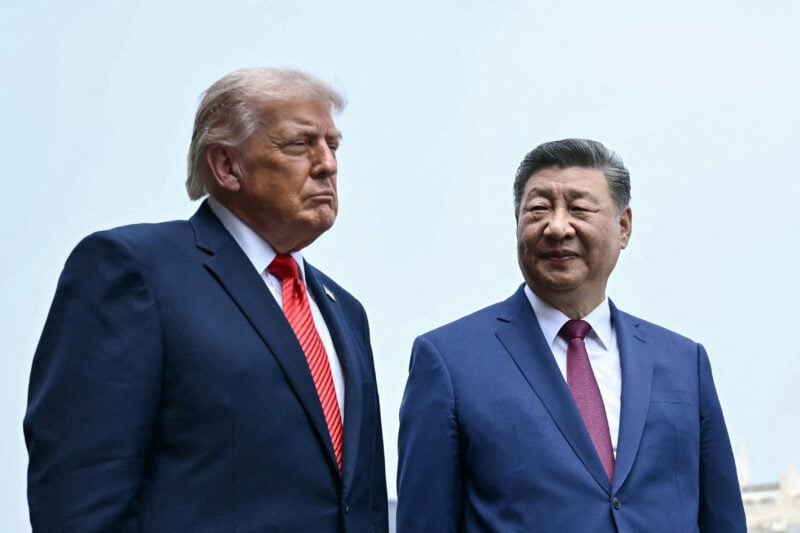
The implementation of these tariffs will undoubtedly test the tolerance of international economic partners. Many have previously opted for negotiation and trade deals to minimize tariff impacts, a strategy that may be further tested as these new measures take effect. A crucial juncture will be the upcoming meeting between President Trump and Chinese President Xi Jinping at the Group of 20 summit, especially as their current trade truce is set to expire in January.
U.S. Trade Representative Greer noted that exceeding certain tariff thresholds, such as the 20% for China, would be viewed as a breach of existing agreements. Discussions are also underway to implement tariff reductions on approximately $30 billion of non-sensitive Chinese exports under a new board of trade. Furthermore, these new levies are not expected to be cumulative with existing duties related to forced-labor investigations, with only the higher rate applying if both sets of duties are applicable.
The U.S. is also adjusting tariffs on imports from Brazil, stemming from a review of the country’s digital policies. This includes considering an increased out-of-quota tariff rate on sugar and proposing a 10% tariff on finished aircraft. This move follows a recent political shift in Brazil, adding another layer of complexity to international trade relations. The strategic application of these tariffs underscores a broader U.S. economic policy aimed at recalibrating global trade dynamics and addressing perceived imbalances.
© 2026 Bloomberg L.P. Source: gCaptain Maritime Tech