

TL;DR
- Google achieved major AI research breakthroughs in 2025 with Gemini 3 and Gemma 3.
- Advancements focused on improved reasoning, multimodality, and efficiency in AI models.
- These AI improvements are being integrated into Google’s products and scientific research.
- New agentic capabilities are transforming software development and core products like Search.
- Generative media tools saw significant advancements, enhancing creative possibilities.
- AI is driving scientific discovery in areas like genomics, healthcare, and quantum computing.
What’s New / Why It Matters
Google has announced a year of significant AI research breakthroughs in 2025, marking a shift from AI as a tool to a utility. The company’s advancements, particularly with models like Gemini 3 and Gemma 3, have dramatically improved AI’s reasoning, multimodality, and efficiency. These developments are not confined to research labs; they are actively being integrated into a wide array of Google’s products and services, promising more intelligent and capable user experiences.
For consumers, this means more sophisticated AI-powered features on devices like the Pixel 10 and enhanced capabilities within Search. For developers, new agentic systems are set to revolutionize software development, moving beyond simple assistance to collaborative partnerships. The scientific community stands to benefit immensely, with AI accelerating progress in fields ranging from genomics and healthcare to mathematics and quantum computing.
At a Glance
| Item | Details |
|---|---|
| Key Models | Gemini 3, Gemini 3 Flash, Gemma 3 |
| Focus Areas | Reasoning, Multimodality, Efficiency, Generative Capabilities |
| Product Integration | Pixel 10, Search AI Mode, Gemini app, NotebookLM |
| Scientific Impact | Genomics, Healthcare, Math, Coding, Quantum Computing |
| Hardware | Ironwood TPU (for inference) |
Key AI Model Advancements
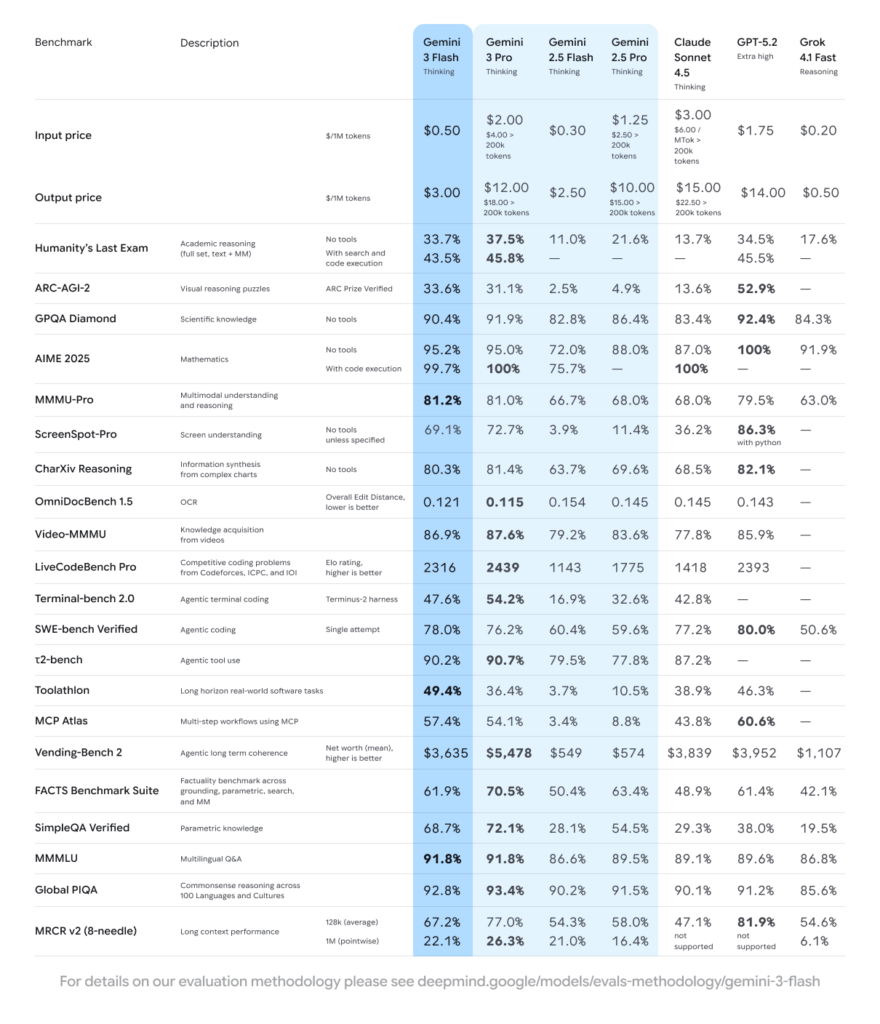
In 2025, Google made substantial strides in its AI model capabilities, beginning with the release of Gemini 2.5 in March and culminating in the November launch of Gemini 3 and the December debut of Gemini 3 Flash. Gemini 3 Pro is highlighted as the company’s most powerful model to date, demonstrating significant leaps in reasoning and multimodal understanding. It achieved top scores on benchmarks like Humanity’s Last Exam and GPQA Diamond, and set a new standard in mathematics with a 23.4% score on MathArena Apex.
Gemini 3 Flash offers a compelling alternative, combining Gemini 3’s advanced reasoning with enhanced latency, efficiency, and cost-effectiveness. Google states that Gemini 3 Flash surpasses the capabilities of the previous Gemini 2.5 Pro model at a fraction of the price and with substantially better latency, continuing a trend where each generation’s ‘Flash’ model outperforms the previous generation’s ‘Pro’ model.
Open Models and Accessibility
Google continues its commitment to making advanced AI technology accessible through state-of-the-art open models. The Gemma family of models, designed to be lightweight and open for public use, received significant updates in 2025. These improvements include the introduction of multimodal capabilities, a substantially increased context window, expanded multilingual support, and enhanced efficiency and performance.
Transforming Products with Agentic Capabilities
Throughout 2025, Google has been actively transforming its product portfolio by integrating powerful agentic capabilities, moving AI from a mere tool to a functional utility. This evolution is particularly evident in software development, where AI systems are now designed to collaborate with developers rather than just assist them. Key advancements, such as the coding capabilities within Gemini 3 and the launch of Google Antigravity, signal a new era in AI-assisted software engineering.
Beyond developer tools, these AI-first innovations are enhancing core products. Features on the Pixel 10, updates to AI Mode in Search, the dedicated Gemini app, and NotebookLM with its new Deep Research capabilities all showcase this AI-driven transformation. These integrations aim to make Google’s offerings more intuitive, powerful, and helpful in everyday use.
Generative Media and Creativity
2025 was a landmark year for generative media, empowering users with unprecedented creative capabilities. Models and tools for generating video, images, and audio became more effective and widely adopted. Breakthroughs like Nano Banana and Nano Banana Pro offer advanced native image generation and editing features.
Google collaborated with creative professionals to refine tools such as Flow and Music AI Sandbox, making them more valuable for creative workflows. Additionally, new AI-powered experiences were introduced in the Google Arts & Culture lab, alongside significant upgrades to image editing within the Gemini app. The introduction of powerful new generative media models like Veo 3.1 and Imagen 4 further expands the possibilities for digital creation.

AI-Driven Scientific Discovery
Scientific advances saw a significant boost in 2025, driven by AI breakthroughs across life sciences, health, natural sciences, and mathematics. Google has been developing AI resources and tools to aid researchers in understanding, identifying, and developing treatments in healthcare. In genomics, AI is now being used to interpret complex data beyond simple sequencing.
The 5-year anniversary of AlphaFold, the AI system that solved the protein folding problem, was celebrated. AlphaFold has been adopted by over 3 million researchers globally. Furthermore, Gemini’s advanced reasoning capabilities, including Deep Think, have enabled significant progress in mathematics and coding, achieving gold medal standards in international competitions.
Quantum Computing and Future Science
Google is also at the forefront of major discoveries and shaping the future of science in areas like quantum computing and energy. Research in quantum computing garnered significant public attention, with progress towards real-world applications demonstrated by Quantum Echoes. Notably, Googler Michel Devoret was awarded the 2025 Physics Nobel Prize for his foundational 1980s quantum research.
Infrastructure and Efficiency
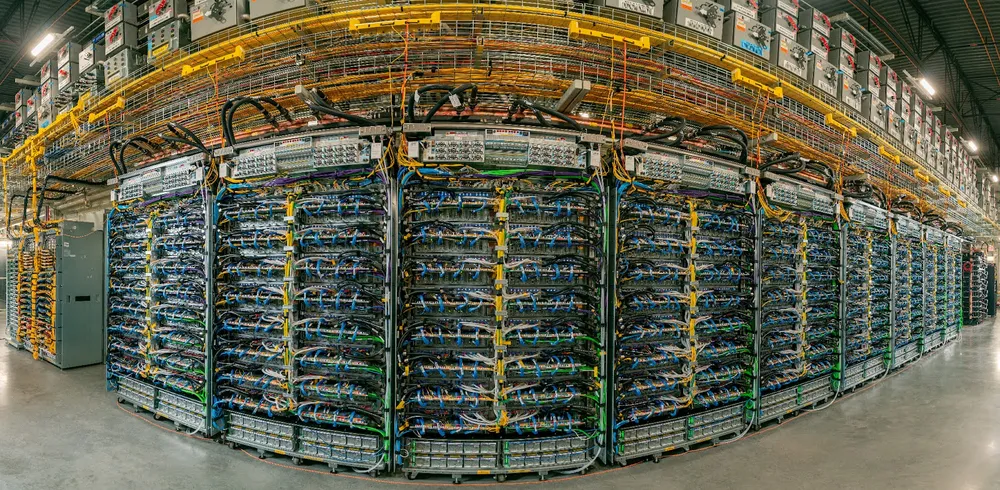
Underpinning these AI advancements is a continued focus on core infrastructure. In 2025, Google advanced hardware design, particularly for inference, with the introduction of the Ironwood TPU. This new TPU was developed using a method called AlphaChip and is part of Google’s commitment to measuring and improving the environmental impact of its AI operations.
Techswire’s Take
Google’s 2025 research review underscores a strategic pivot towards making AI a pervasive and actionable utility. The dual focus on cutting-edge model development (Gemini 3, Gemma 3) and broad product integration signals a commitment to democratizing advanced AI capabilities. The impact on scientific discovery and creative tools suggests AI is moving beyond specialized applications to become a fundamental enabler across industries, though the long-term implications of agentic AI in software development and its ethical considerations will be crucial to monitor.