
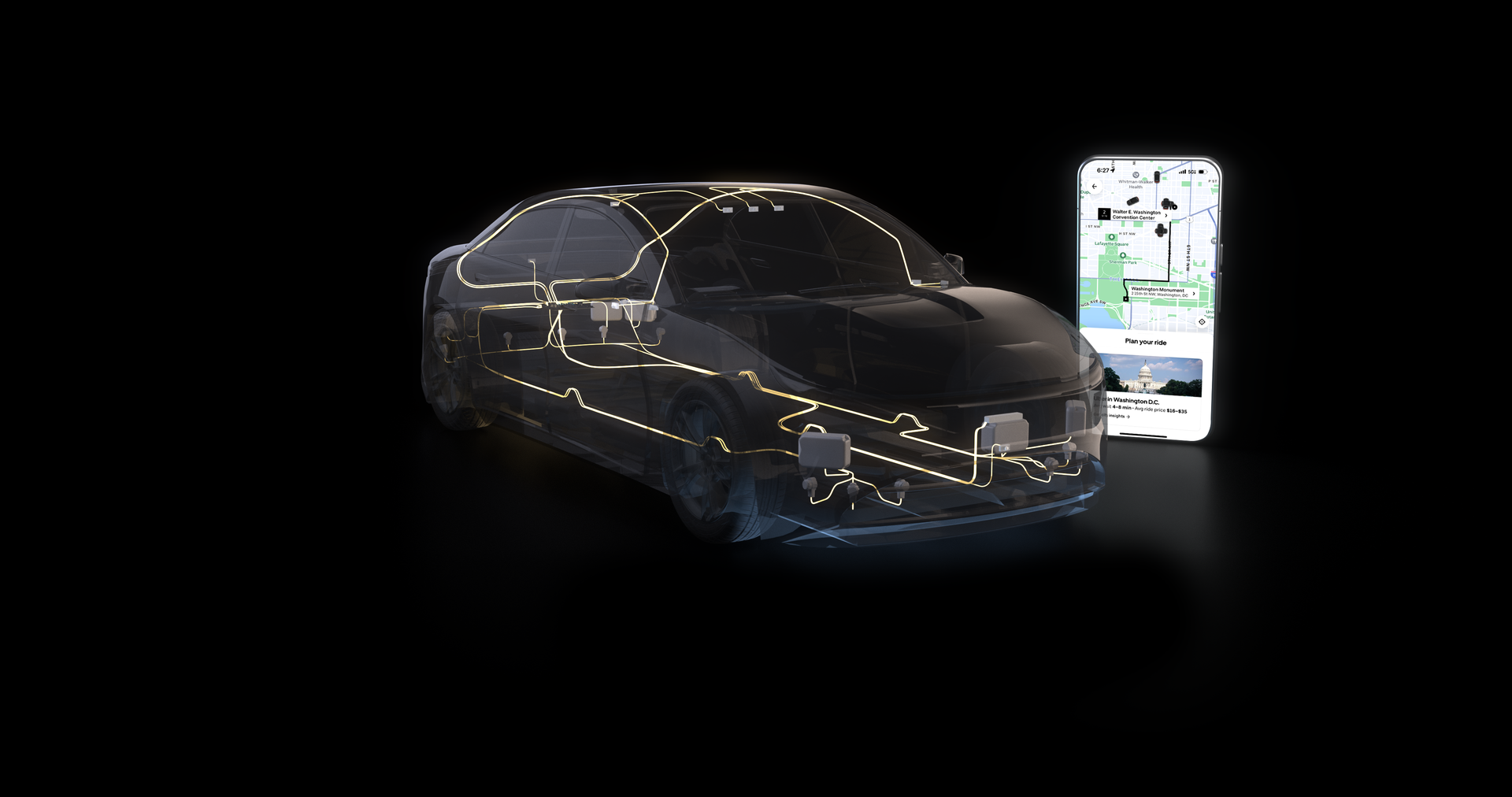
- NVIDIA and Uber are partnering to scale global Level 4 robotaxi networks.
- The collaboration will utilize NVIDIA’s DRIVE AGX Hyperion 10 platform and DRIVE AV software.
- Uber aims to deploy up to 100,000 autonomous vehicles by 2027.
- NVIDIA’s new AI infrastructure, including foundation models, will power autonomous driving development.
- The partnership aims to integrate human-driven and autonomous vehicles into a unified network.
What’s New / Why It Matters
NVIDIA has announced a significant partnership with Uber, aiming to accelerate the global deployment of Level 4 autonomous vehicle networks. This collaboration will leverage NVIDIA’s latest autonomous vehicle (AV) technology, including the DRIVE AGX Hyperion 10 development platform and DRIVE AV software, to support Uber’s ambitious plans for scaling its robotaxi and autonomous delivery fleets. The initiative is poised to bring a new era of mobility, promising safer, cleaner, and more efficient transportation systems.
For consumers, this partnership signals a potential future where autonomous ride-hailing becomes a widespread reality, offering new transportation options. For the automotive industry and AV developers, it provides a standardized, AI-powered foundation for building and deploying Level 4 autonomous vehicles at scale. The integration of human-driven and autonomous vehicles into a single operating network by Uber could also revolutionize ride-sharing services.
NVIDIA DRIVE AGX Hyperion 10: The Common Platform for L4-Ready Vehicles
At the heart of this initiative is the NVIDIA DRIVE AGX Hyperion 10 production platform. This comprehensive system includes the NVIDIA DRIVE AGX Thor system-on-a-chip (SoC), the safety-certified NVIDIA DriveOS operating system, and a sophisticated sensor suite. The sensor package features 14 high-definition cameras, nine radars, one lidar, and 12 ultrasonic sensors, all integrated with a qualified board design.
The Hyperion 10 platform is designed to be modular and customizable, allowing automakers and AV developers to tailor it to their specific needs. By providing a pre-qualified sensor architecture, NVIDIA aims to significantly accelerate development timelines, reduce costs, and offer a strong starting point for building safe and scalable autonomous vehicles. The platform’s core, the DRIVE AGX Thor, powered by NVIDIA’s Blackwell architecture, delivers over 2,000 FP4 teraflops of compute power, optimized for complex AI workloads like transformer and vision-language action (VLA) models.
Generative AI and Foundation Models Transform Autonomy
NVIDIA’s approach to autonomous driving is increasingly reliant on advanced AI techniques, including foundation models, large language models, and generative AI. These models are trained on vast datasets, encompassing trillions of miles of real and synthetic driving data. This extensive training allows self-driving systems to tackle complex urban driving scenarios with a level of reasoning and adaptability akin to human drivers.
The introduction of new reasoning VLA models is particularly noteworthy. These models integrate visual understanding, natural language reasoning, and action generation, enabling AVs to achieve human-level comprehension of their surroundings. This capability is crucial for navigating unpredictable real-world conditions, such as sudden traffic changes, complex intersections, and unexpected human behavior, all in real-time. NVIDIA is also releasing the world’s largest multimodal AV dataset, comprising 1,700 hours of real-world data from various sensors across 25 countries, to further bolster the development and validation of these advanced AI models.
NVIDIA Halos Sets New Standards in Vehicle Safety and Certification
Ensuring the safety and security of autonomous systems is paramount, and NVIDIA is addressing this with its NVIDIA Halos system. Halos provides a comprehensive framework for AI safety and cybersecurity, extending from the cloud to the vehicle. The NVIDIA Halos AI Systems Inspection Lab is dedicated to evaluating AI safety and cybersecurity in automotive and robotics applications.
This lab oversees the new Halos Certified Program, which helps guarantee that products and systems meet stringent criteria for trusted physical AI deployments. The lab has achieved accreditation from the ANSI Accreditation Board, making it the first in the industry to do so. This accreditation underscores NVIDIA’s commitment to accelerating the safe, large-scale deployment of Level 4 autonomous driving and other AI-powered systems.

Industry Collaboration and Ecosystem Growth
The partnership extends beyond NVIDIA and Uber, with a growing ecosystem of automakers, robotaxi companies, and tier 1 suppliers collaborating with NVIDIA. Stellantis is developing AV-Ready Platforms optimized for Level 4 capabilities, integrating NVIDIA’s full-stack AI technology and connecting with Uber’s mobility ecosystem. Lucid is advancing Level 4 autonomous capabilities for its next-generation vehicles using NVIDIA’s AV software on the DRIVE Hyperion platform.
Mercedes-Benz is also exploring future collaborations, leveraging its MB.OS operating system and DRIVE AGX Hyperion. Several other companies, including Avride, May Mobility, Momenta, Nuro, Pony.ai, Wayve, and WeRide, are developing their software stacks on the NVIDIA DRIVE Level 4 platform. In the trucking sector, Aurora, Volvo Autonomous Solutions, and Waabi are developing Level 4 autonomous trucks powered by NVIDIA DRIVE, with future systems built on DRIVE AGX Thor set to accelerate Volvo’s upcoming L4 fleet.
Availability
Uber aims to begin deploying these NVIDIA DRIVE-powered autonomous vehicles starting in 2027, with a long-term goal of scaling its fleet to 100,000 vehicles. Specific pricing for the NVIDIA DRIVE AGX Hyperion 10 platform and related software is not announced, as it is a development platform for automotive manufacturers and AV developers.
Techswire’s Take
The NVIDIA-Uber partnership represents a significant step towards realizing the widespread adoption of Level 4 autonomous driving. By combining NVIDIA’s advanced AI hardware and software with Uber’s extensive mobility network and operational expertise, the collaboration addresses key challenges in scaling robotaxi services globally. The focus on a standardized platform like Hyperion 10, coupled with advancements in generative AI and a robust safety framework, could accelerate the transition from pilot programs to mass-market deployment, potentially reshaping urban transportation.