
The 10-Second Story: Crafting a PostScript Interpreter
For those who appreciate the elegance of Reverse Polish Notation (RPN) and the foundational technologies behind digital documents, the challenge of writing your own PostScript interpreter offers a unique and rewarding engineering endeavor. This exploration delves into the architecture of PostScript, inspired by a recent project that demystifies its stack-based operations.
Table of Contents
RPN’s Enduring Appeal in Page Description
PostScript, originally conceived as a page description language for laser printers, has a fascinating lineage that extends to the ubiquitous PDF format. Its design philosophy strongly resonates with fans of RPN calculators and languages like Forth, employing multiple stacks to manage its operations.
The language operates on a series of stacks, primarily the operand stack for data and the dictionary stack for managing scope and definitions. This approach allows for a concise and powerful way to describe complex page layouts and graphics.
Building a Minimalist PostScript Interpreter
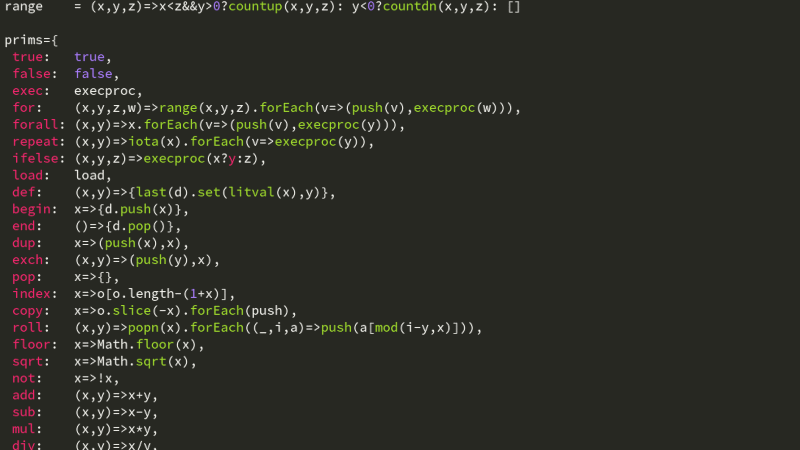
A practical example demonstrates how to construct a functional, albeit simplified, PostScript interpreter using JavaScript. This interpreter successfully manages an operand stack, a dictionary stack, and arrays, providing a tangible understanding of PostScript’s core mechanics.
While this example features minimal error handling, it serves as an excellent educational tool. For those seeking a production-ready solution, the established Ghostscript interpreter remains the industry standard. However, the charm of a small, understandable interpreter lies in its transparency and accessibility for learning.
Exploring PostScript’s Depth and Legacy
The original PostScript source code is available for those who wish to delve deeper into its intricacies. Its influence is undeniable, extending beyond printing to embedded systems and document standards. The language’s structure is a testament to elegant design principles.
For a glimpse into PostScript’s expressive power, consider its application in programming challenges. Examples include a full chess program written in PostScript, showcasing its Turing-completeness, and even ports of classic games like Doom, highlighting its versatility.
The Future of Interpreted Languages
The development of custom interpreters, like the one for PostScript, mirrors broader trends in software engineering. As seen with AI writes code, engineers own the system, the focus is shifting towards understanding and controlling the underlying mechanisms rather than just utilizing high-level abstractions. Building a PostScript interpreter provides a hands-on appreciation for language design and execution.

This kind of low-level understanding is crucial across various technical domains. Whether it’s optimizing performance, ensuring security, or innovating new functionalities, a deep grasp of how systems operate is invaluable. It’s akin to understanding the fundamental protocols that govern network communication or the intricate workings of a processor.
Conclusion: A Practical Dive into Stack-Based Computation
Creating your own PostScript interpreter is more than an academic exercise; it’s a practical journey into the heart of stack-based computation and language design. It offers a unique perspective on how complex instructions are processed and rendered, a skill set applicable to numerous modern technological challenges.
The principles learned from building a PostScript interpreter can inform the development of new programming languages, document formats, and even specialized virtual machines. It’s a testament to how understanding historical technologies can provide profound insights into current and future innovations.
Source: Hackaday Engineering
URL: hackaday.com
One Comment