Michigan’s First Virtual Power Plant Pilot Launches in Net-Zero Community
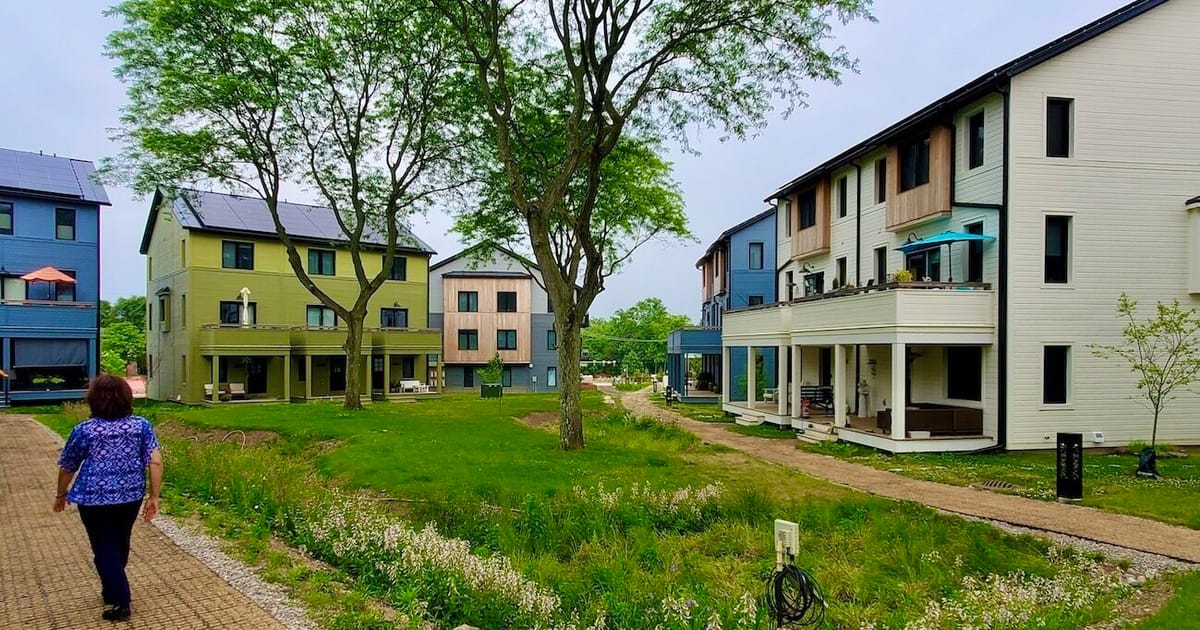
A pioneering initiative in Ann Arbor, Michigan, is set to transform a new net-zero community into the state’s first residential virtual power plant. Veridian at County Farm, a development designed for fossil-fuel-free living, is enabling residents like Mitch and Lori Hall to contribute their home energy storage systems to the broader electricity grid. This pilot program, spearheaded by DTE Energy, aims to test a novel approach for enhancing grid reliability and potentially lowering energy costs for consumers.
Table of Contents
The concept of a virtual power plant (VPP) aggregates distributed energy resources, such as home batteries, to function as a single, dispatchable power source. By remotely controlling these connected batteries, DTE Energy can draw stored solar power during peak demand periods, reducing the need for expensive and carbon-intensive peaker plants. This innovative model not only benefits the grid but also offers financial incentives to participating homeowners, who are compensated for allowing their batteries to be utilized.
Architectural Integration: Home Batteries and Grid Management
The Veridian community is architecturally designed to support this energy ecosystem. Homes are equipped with solar panels and battery storage systems, primarily manufactured by Sonnen USA. These systems are engineered to balance energy consumption with on-site generation, aiming for net-zero energy usage over the year. The pilot program will involve nearly 100 of these battery-equipped homes.
Sonnen’s proprietary software plays a crucial role in managing the VPP. It allows DTE Energy to orchestrate the charging and discharging of individual home batteries, aggregating their capacity to provide grid services. This sophisticated control system is key to the VPP’s effectiveness, ensuring that power can be delivered when and where it’s needed most, much like a traditional power plant but with distributed assets.
The pilot is expected to deliver up to approximately 300 kilowatts for three-hour durations. This capacity is significant for a residential-scale VPP and will provide DTE with valuable data on the performance and reliability of a distributed battery fleet. This information is critical for planning future, larger-scale VPP deployments and understanding the integration challenges, similar to how advanced satellite data is used to assess infrastructure.
Engineering Trade-offs and Scalability Challenges
While VPPs offer compelling advantages, their widespread adoption has been hindered by several factors. The initial cost of home solar and battery systems remains a barrier for many households. Furthermore, utilities have historically lacked strong incentives to embrace distributed energy resources, often favoring traditional grid infrastructure investments. The success of this pilot hinges on demonstrating clear economic benefits for both the utility and the consumers.
One of the primary trade-offs involves consumer comfort and control. While DTE manages the battery for participants, ensuring minimal disruption, homeowners must be willing to cede some control over their energy storage. The compensation model needs to be attractive enough to offset any perceived inconvenience or potential impact on daily energy usage patterns. The efficiency gains from technologies like heat pumps, which offer significant savings, highlight the growing consumer interest in energy optimization.
The complexity of integrating numerous distributed assets into existing grid operations presents another challenge. Unlike a centralized power plant, a VPP requires robust communication networks and sophisticated control algorithms to manage a dynamic and potentially variable energy supply. Ensuring cybersecurity for these interconnected systems is also paramount, preventing potential vulnerabilities that could be exploited, as seen in other cyber incidents.

Field Readiness and Future Verdict
The Veridian VPP pilot builds upon successful precedents, such as the Wattsmart Battery program in Utah, Wyoming, and Idaho, which rapidly scaled from a pilot to a full-fledged program. This existing success provides a strong foundation and a model for DTE Energy to follow, demonstrating the viability and benefits of residential VPPs.
Experts like Kevin Brehm from RMI emphasize that the technology and operational models for VPPs are mature, suggesting that utilities can move beyond extensive piloting. The key is effective integration into resource planning and grid operations. The Veridian project’s outcomes will be closely watched by other developers and utilities across the country, potentially inspiring similar initiatives and accelerating the adoption of VPPs nationwide.
The verdict on the Veridian virtual power plant pilot will depend on its ability to deliver on its promises: strengthening grid reliability, reducing costs, and providing tangible benefits to participating residents. If successful, it could serve as a crucial blueprint for how communities can harness distributed energy resources to create a more resilient and sustainable energy future, paving the way for broader adoption of this transformative technology.
Source: Canary Media Clean Energy Tech