
Oqtadrive: A Breakthrough microdrive emulator for Vintage Sinclair Machines
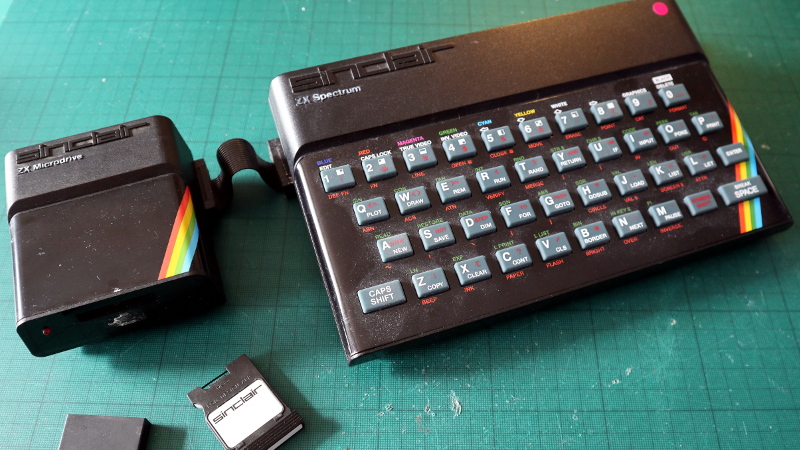
The legacy of Sir Clive Sinclair’s computing innovations is often intertwined with unique, sometimes eccentric, design choices. Among the most memorable was the Microdrive, a mass storage solution akin to a miniaturized 8-track cartridge. These devices offered approximately 80KB of storage on a continuous tape loop, but their reliability was notoriously suspect, even in their prime. With all original units now over four decades old, finding a functional Microdrive is a rare feat.
Table of Contents
However, for enthusiasts still cherishing their Sinclair QL or ZX Spectrum with an Interface 1, hope has arrived. [Alexander Vollschwitz] has developed Oqtadrive, a sophisticated microdrive emulator that revives this iconic storage technology. This innovative solution emulates up to eight daisy-chained Microdrives and even recreates the Sinclair networking system over the Internet. This network capability is particularly significant, as many users never experienced it even when the hardware was locally available.
Hardware and Software Architecture
At the core of the Oqtadrive system lies an unassuming Arduino Nano. This microcontroller interfaces directly with the Microdrive port of the Sinclair computer. Optionally, it can also connect to the network port, bridging the gap to a daemon application running on a host computer. This host can be virtually any modern computing device, from a standard PC or Mac to a compact Raspberry Pi Zero, demonstrating impressive flexibility.
The Arduino Nano meticulously emulates both the hardware specifications and the communication protocols of the original Sinclair Microdrive. Meanwhile, the host computer’s daemon software manages the actual storage and networking functions. This distributed architecture allows for robust emulation while leveraging the processing power and storage capacity of contemporary hardware. This approach ensures that the microdrive emulator functions seamlessly with the vintage machines.
Engineering Trade-offs and Limitations
While Oqtadrive offers a compelling solution, it’s essential to acknowledge the inherent limitations. The original Microdrives were known for their sluggish performance and questionable data integrity. The emulator, while vastly more reliable than its physical counterpart, is still bound by the original system’s design. The 80KB storage capacity per drive, though emulated accurately, remains a significant constraint for modern software development or data storage needs.
Furthermore, the reliance on the specific Sinclair protocols means that compatibility is strictly limited to supported models. While the concept of emulating older hardware is a testament to ingenuity, it also highlights the rapid advancements in storage technology. For instance, modern solutions like the ESP32-S3 controller are unlocking advanced features in areas such as swimming pool automation, showcasing a different scale of technological progress.

Field Readiness and Verdict
Oqtadrive represents a significant achievement in retrocomputing preservation. It provides a practical and accessible way for enthusiasts to interact with classic Sinclair software and systems without the risk of hardware failure. The use of readily available components like the Arduino Nano makes it a project that many can replicate or adapt.
The project’s strength lies in its faithful emulation of original Sinclair methods and hardware interfaces. It respects the original architecture while overcoming the physical decay of time. For those who remember the quirks of the Microdrive or wish to experience it for the first time, Oqtadrive is an invaluable tool. It successfully bridges the gap between the past and the present, ensuring that these vintage computing experiences remain accessible and functional for years to come, proving that even without original hardware, the spirit of innovation continues.
Source: Hackaday Engineering