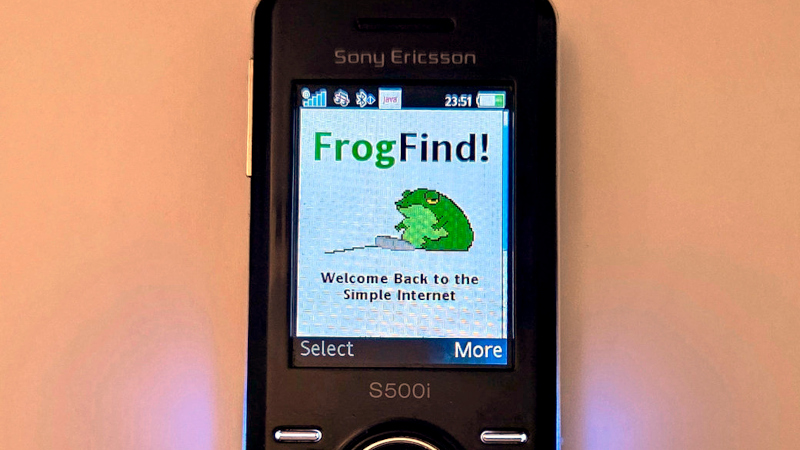
Java Phone Internet Connectivity: A 2G Revival Breakthrough
The concept of Java phone internet access, once a niche feature of early mobile devices, is experiencing an unexpected resurgence. These early internet-capable mobile phones, often referred to as feature phones, predated the modern smartphone era. They relied on 2G modems for connectivity, with some offering built-in browsers or the ability to run basic Java applications. As 2G networks are phased out globally, the expectation was that these devices would become obsolete for online tasks.
Table of Contents
However, recent engineering efforts demonstrate that many of these venerable devices can still connect to the internet, not through cellular networks, but via Bluetooth. This innovative approach bypasses the need for dwindling 2G infrastructure, offering a surprising second life for these older mobile technologies. It’s a testament to the enduring utility of well-established wireless protocols.
Hardware and Software Architecture for Bluetooth Internet Access
The revival of Java phone internet capabilities hinges on leveraging Bluetooth technology, a short-range wireless standard that was envisioned for personal area networks in the 1990s. While Wi-Fi ultimately dominated the wireless networking landscape, Bluetooth’s persistent presence in many older phones provides an alternative pathway. The core of this setup involves a Raspberry Pi acting as a Bluetooth-enabled gateway.
This Raspberry Pi is configured to create a local network accessible via Bluetooth. The vintage phone, equipped with its own Bluetooth modem, can then pair with the Raspberry Pi. This connection effectively bridges the phone’s limited connectivity to the broader internet through the Raspberry Pi’s more robust network interface. This architecture cleverly repurposes existing hardware without requiring significant modifications.
Opera Mini: The Venerable Browser for Feature Phones
Accessing the web on these devices necessitated specialized browsers, and Opera Mini was a standout choice. Its server-side rendering capabilities were crucial for efficiently displaying web content on the limited screens and processing power of feature phones. Remarkably, a Java version of Opera Mini is still available, allowing users to install this classic browser on their compatible devices.
The availability of Opera Mini for Java-based phones is a critical component in enabling Java phone internet browsing. It ensures that even with a successful network connection established via Bluetooth, there is a functional application capable of rendering modern web pages, albeit with the limitations inherent to its design. This combination of a Bluetooth gateway and a capable browser makes the feat possible.
Engineering Trade-offs and Limitations
While the ability to get a Java phone internet connection working again is impressive, it comes with significant trade-offs. The primary limitation is speed; Bluetooth connections, especially older versions, are considerably slower than modern cellular or Wi-Fi standards. Users should expect data transfer rates that are orders of magnitude lower than what is common today, making activities like streaming video or downloading large files impractical.
Furthermore, the security implications of connecting old devices to any network must be considered. These phones often lack modern security protocols and may be vulnerable to exploits. The software available for them is also limited, and many websites may not render correctly or function as expected in older browsers like Opera Mini, even with its server-side rendering. This project is more about demonstrating connectivity than providing a practical daily internet solution.
Field Readiness and Verdict
The successful implementation of Java phone internet access via Bluetooth demonstrates a clever engineering solution for a specific niche. It proves that older mobile hardware can still be utilized for basic online functions, provided a suitable network bridge is available. The use of a Raspberry Pi as a Bluetooth gateway is an accessible method for hobbyists and retro-computing enthusiasts.
For those looking to relive the experience of early mobile internet or simply to experiment with vintage technology, this setup offers a unique opportunity. While not a replacement for modern smartphones, it highlights the resilience and adaptability of older tech. It’s a fascinating project that brings a piece of mobile history back online, offering a glimpse into the early days of mobile connectivity and the potential of repurposing legacy hardware.
Source: Hackaday Engineering