
Arm-powered micro:bit: Young Innovators Drive Community Solutions
The Arm-powered micro:bit is at the forefront of empowering young minds to address critical real-world challenges. In Honduras, a groundbreaking program called Tinkering with Technology and AI is fostering AI literacy through hands-on projects. Students are transforming local issues into tangible technological solutions, with every project utilizing the BBC micro:bit, a compact programmable computer built on Arm’s architecture. This initiative is a key component of AI in Play, a collaborative ecosystem co-designed by Arm and the UNICEF Office of Innovation.
Table of Contents
These young innovators are demonstrating the versatility of Arm technology by developing diverse applications. From flood-warning systems designed to automatically close roads during hazardous water levels to wearable earthquake alerts for enhanced school safety, the impact is profound. The program encourages a problem-solving mindset, enabling students to not only conceptualize but also build and test their ideas within their communities.
Architectural Foundation: The Arm micro:bit Ecosystem
At the heart of these innovations lies the Arm-powered micro:bit. This accessible, pocket-sized computer provides a robust platform for learning about embedded systems and artificial intelligence. Its architecture, based on Arm’s energy-efficient cores, allows for complex computations and sensor integration necessary for sophisticated prototypes.
The program emphasizes a ‘learning by doing’ approach. Students develop critical thinking, creativity, and collaboration skills as they navigate the design thinking process: identifying a challenge, ideating a solution, prototyping, testing, and refining. This methodology ensures that the technology is not just a tool but a vehicle for holistic development, encouraging children to become creators rather than passive consumers of technology.
Engineering Trade-offs and Accessibility Challenges
The Tinkering with Technology and AI program operates within real-world constraints, particularly in regions with limited technological infrastructure. In Honduras, for instance, only about 15% of schools have internet connectivity, and a mere 5% of rural schools possess computers. This scarcity necessitates ingenious solutions, such as shared devices and collaborative learning models where two to three students work on a single tablet.
Teachers also face the challenge of adapting to new technologies. The program addresses this through comprehensive workshops, dedicated mentoring, and fostering a peer-support network. This ensures educators gain the confidence to guide students through experimentation, even when encountering setbacks. The focus remains on maximizing the impact of limited resources, a testament to the students’ determination and the program’s adaptive strategy.
Field Readiness and Future Verdict
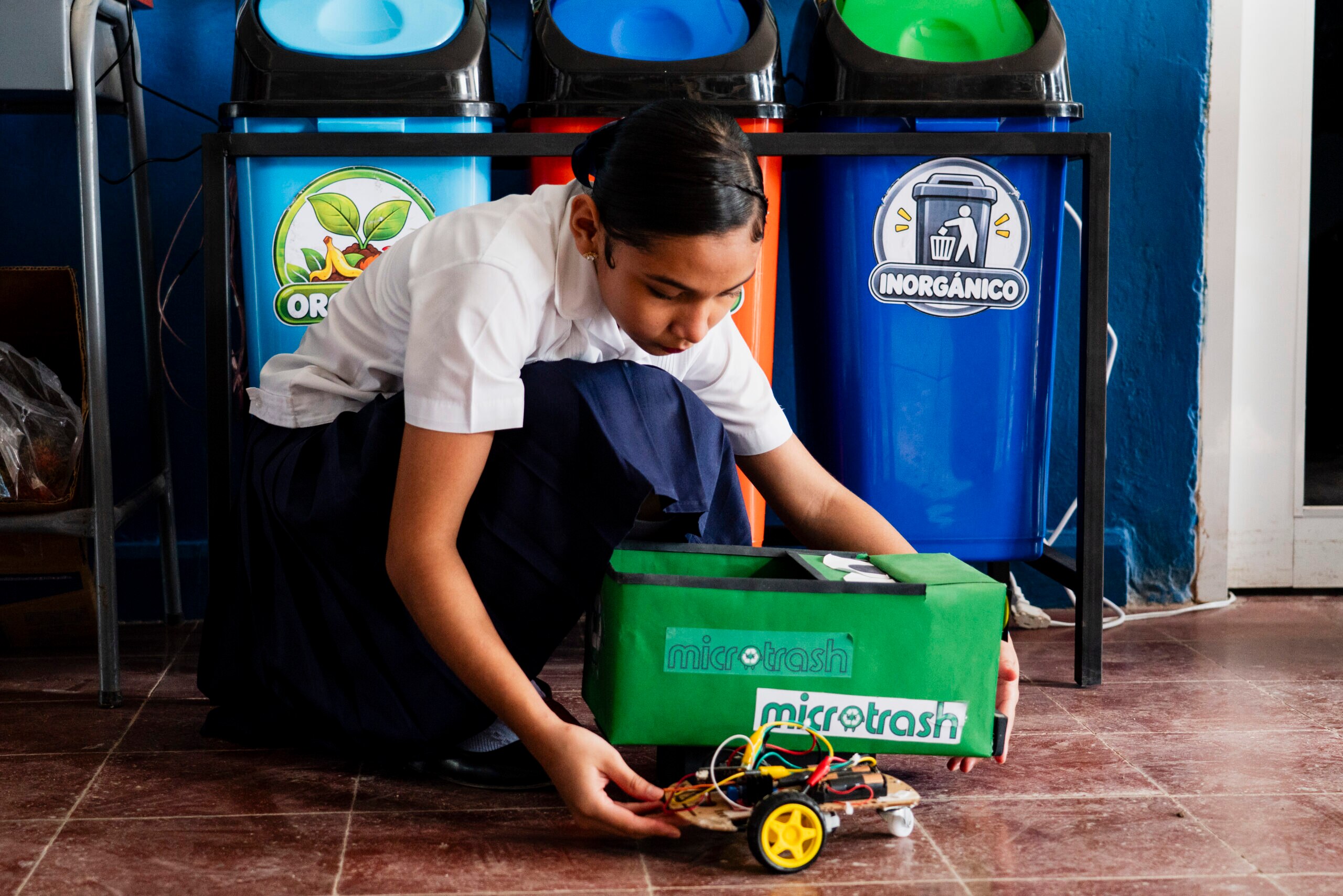
The success of the program is evident in the diverse range of projects presented, including tools for coffee harvesting, a handwashing timer for children, math games, water contamination detectors, soil-moisture monitors, and an AI model for waste sorting. Six projects were selected to represent Honduras in the international do your :bit showcase, aligning with the United Nations Sustainable Development Goals.
This initiative underscores the potential of accessible technology like the Arm-powered micro:bit to foster innovation and address societal needs. By equipping young people with the necessary skills and confidence, Arm, UNICEF, and their partners are cultivating a generation capable of shaping technology for the betterment of their communities. As AI in Play expands, the vision is to broaden these opportunities, empowering more young individuals to play a pivotal role in defining technology’s future impact.
Source: Arm Newsroom