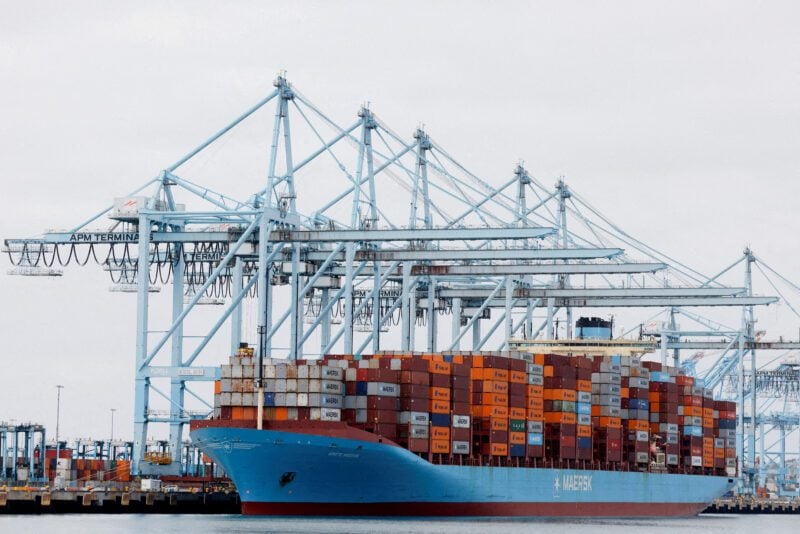

Port Labor Agreement: Critical Deadline Looms for LA-Long Beach Ports
More than 110 U.S. trade associations are issuing an urgent plea for a resolution as the contract extension for port security workers at the Ports of Los Angeles and Long Beach nears its expiration. The deadline, set for just after midnight Saturday, could trigger a strike with significant economic ramifications. This critical juncture highlights the delicate balance of labor relations within vital U.S. trade infrastructure.
Table of Contents
The Pacific Maritime Association (PMA) and the International Longshore and Warehouse Union (ILWU) Local 26 are engaged in intense negotiations for a contract covering approximately 250 port security personnel. The urgency is amplified by existing congestion issues, making any disruption particularly damaging to the flow of goods.
Economic Impact of Potential Work Stoppage
A work stoppage at the nation’s busiest container port complex would severely jeopardize holiday shipments and disrupt manufacturing supply chains. The collective warning from over 110 trade groups, including the National Retail Federation and the U.S. Chamber of Commerce, underscores the widespread concern. These organizations represent a vast spectrum of industries, from retail and manufacturing to agriculture and logistics.
The potential ripple effect extends far beyond the immediate waterfront. Trucking companies, railroads, warehouses, and distribution networks nationwide could face significant disruptions. Clearing container backlogs could take weeks or even months, even after operations resume, illustrating the long-term consequences of a prolonged strike.
The Outsized Influence of Local 26
While ILWU Local 26 represents a small fraction, approximately 2%, of the total ILWU workforce at the two ports, its members’ roles are indispensable. They perform crucial security duties at terminals that handle a substantial portion of Southern California’s container traffic. This strategic importance means their actions carry significant weight.
According to PMA data, the six container terminals affected by this dispute are responsible for roughly 85% of cargo handled at the Port of Long Beach and 33% at the Port of Los Angeles. The potential for solidarity actions, where thousands of other longshore workers might honor picket lines, poses a genuine threat of a complete shutdown at these key terminals.
Negotiations and Averting Crisis
Recent negotiations on November 17 reportedly yielded little progress, with the union having already authorized a strike and expressing unwillingness to extend the current agreement. Both sides were scheduled to reconvene on Friday in a final push to reach a resolution. The extensive coalition of trade associations is urging both parties to prioritize a solution that safeguards workers, employers, and consumers.

The situation underscores the complex interplay between labor, commerce, and national economic stability. A resolution to this port labor agreement is paramount to maintaining the smooth flow of goods and preventing widespread economic fallout. For industries reliant on efficient logistics, such as those leveraging advanced AI for supply chain optimization, stability is key. Technologies like the NVIDIA Cosmos Data Factory aim to streamline data generation for AI training, which is crucial for managing complex global supply chains.
The Broader Economic Landscape
The potential strike at LA-Long Beach highlights the fragility of global supply chains, a topic of ongoing discussion in economic circles. Experts are closely watching for signs of quantum stock correction, with certain sectors potentially more vulnerable than others. The ability of major ports to operate without interruption is a fundamental pillar supporting economic activity, impacting everything from consumer prices to manufacturing output.
Ensuring the uninterrupted operation of these vital hubs is essential for businesses and consumers alike. The outcome of these negotiations will undoubtedly have a significant impact on the national and global economic outlook for the remainder of the year and into the next.
Source: gCaptain Maritime Tech