
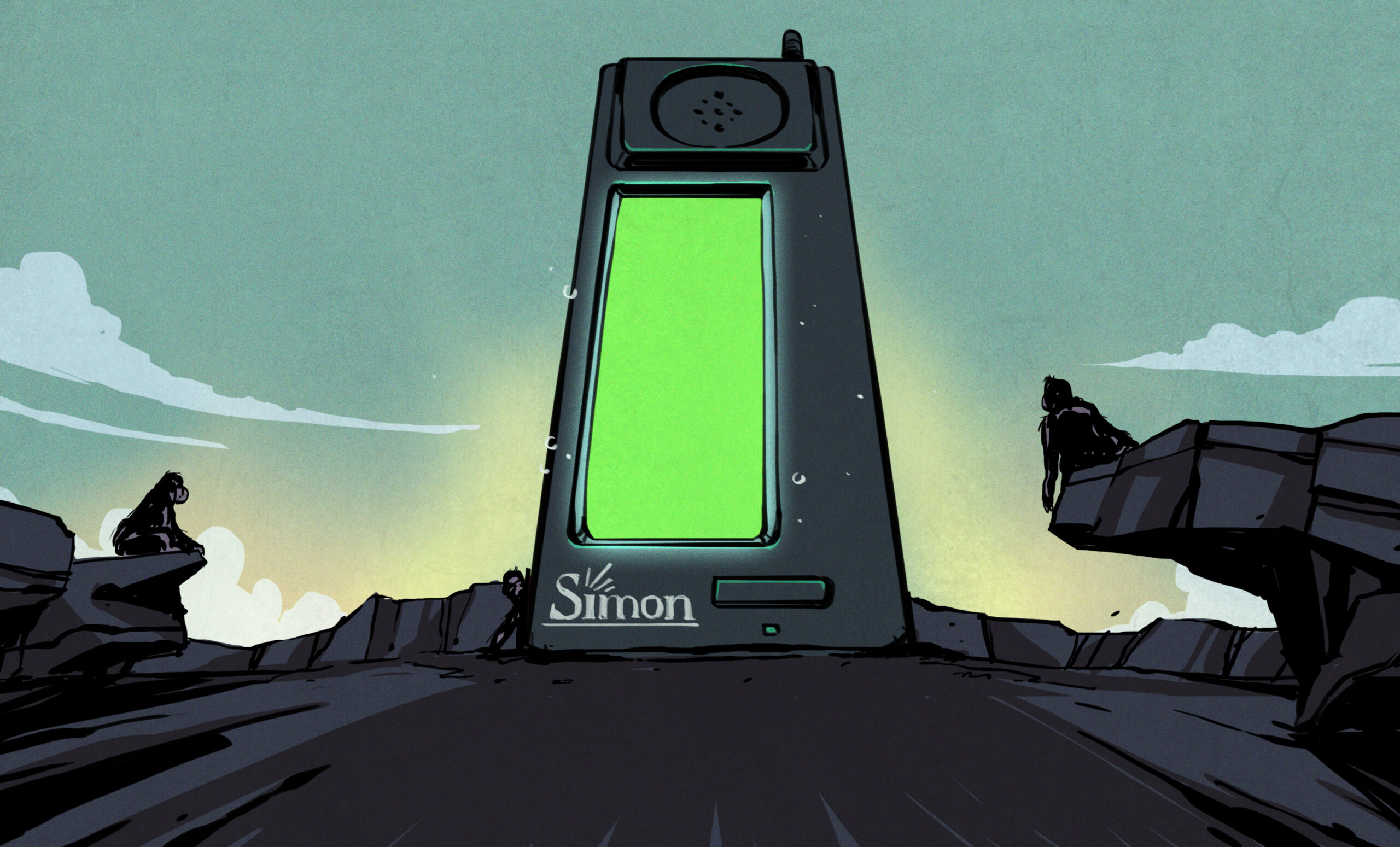
The Dawn of the Smartphone: IBM Simon Personal Communicator
When considering the advent of the smartphone, most minds leap to 2007 and the iconic iPhone. However, the true progenitor of this ubiquitous device arrived much earlier. The IBM Simon Personal Communicator, launched on August 16, 1994, by BellSouth, predates the iPhone by over twelve years. This groundbreaking device integrated a touch screen, applications, and electronic mail, effectively merging a telephone with a personal computer long before it became commonplace.
Table of Contents
Initially conceived as a prototype codenamed Sweetspot at COMDEX two years prior, the concept was the vision of IBM engineer Frank Canova. The early prototype demonstrated remarkable capabilities, including calls, faxes, electronic mail, and cellular paging. It also offered services like maps, stock quotes, and news—features that would take years to become standard on mobile phones.
Refining the Vision: Hardware and Software Architecture
IBM refined the initial design under the codename Angler before BellSouth finalized the product and its name, Simon, a nod to the device’s intended responsiveness. While IBM conceived the idea, the manufacturing was handled by Mitsubishi Electric. Informally, many referred to it as a “ThinkPhone,” a tribute to IBM’s iconic “Think” branding.
Internally, the IBM Simon Personal Communicator operated as an 8086 computer. It was powered by an NEC V30HL processor running at 16 MHz, complemented by a substantial one megabyte of RAM and one megabyte of flash storage. A PCMCIA slot offered expansion possibilities, and it ran Datalight ROM-DOS beneath a unique touch interface known as Navigator, eliminating the need for a traditional DOS prompt.
The display was a monochrome, backlit LCD with a resolution of 160 by 293 pixels, operated via a stylus. The entire unit was substantial, weighing eighteen ounces and measuring eight inches tall, a far cry from today’s sleek pocket-sized devices.
Application Ecosystem and Early Limitations
What truly set the IBM Simon Personal Communicator apart was its software suite. Beyond basic phone functions, it included an address book, calendar, appointment scheduler, calculator, world clock, and notepad with handwritten annotation capabilities. Notably, it featured an on-screen keyboard with predictive text input, a feature that wouldn’t become standard for years.
The device could send and receive faxes and handle electronic mail via its built-in modem. With an accessory card, it could even function as a pager. Third-party software could be loaded from a PC Card or downloaded directly into the device’s memory. However, the third-party software landscape was extremely limited; only one application, DispatchIt, a field-service work order management system, was available, costing thousands of dollars for the PC software and hundreds per phone.

Commercial Viability and the Verdict of Time
Despite its forward-thinking features, the IBM Simon Personal Communicator had a short market life, selling approximately 50,000 units in just six months. Several factors contributed to its limited success. The retail price was steep, $899 with a two-year contract or $1,099 without.
Its nickel-cadmium battery offered only about an hour of talk time, and the analog AMPS network was optimized for voice, not data. Crucially, the World Wide Web was still in its infancy, limiting the utility of any potential browser. IBM explored a successor, codenamed Neon, but ultimately abandoned the project. This case exemplifies how being too early, even with innovative technology, can be commercially challenging, a lesson echoed in the evolution of mobile data capabilities, as seen in the revival of 2G networks for specific applications like the Java Phone Internet.
While commercially unsuccessful in its time, the IBM Simon Personal Communicator laid the conceptual groundwork for modern smartphones. Its ambition to integrate communication, computing, and data services into a single handheld device proved prescient, demonstrating a vision that would eventually reshape global technology and communication.
Source: Hackaday Engineering