Xometry Integrates HP MJF Software, Unlocking Enhanced Build Optimization
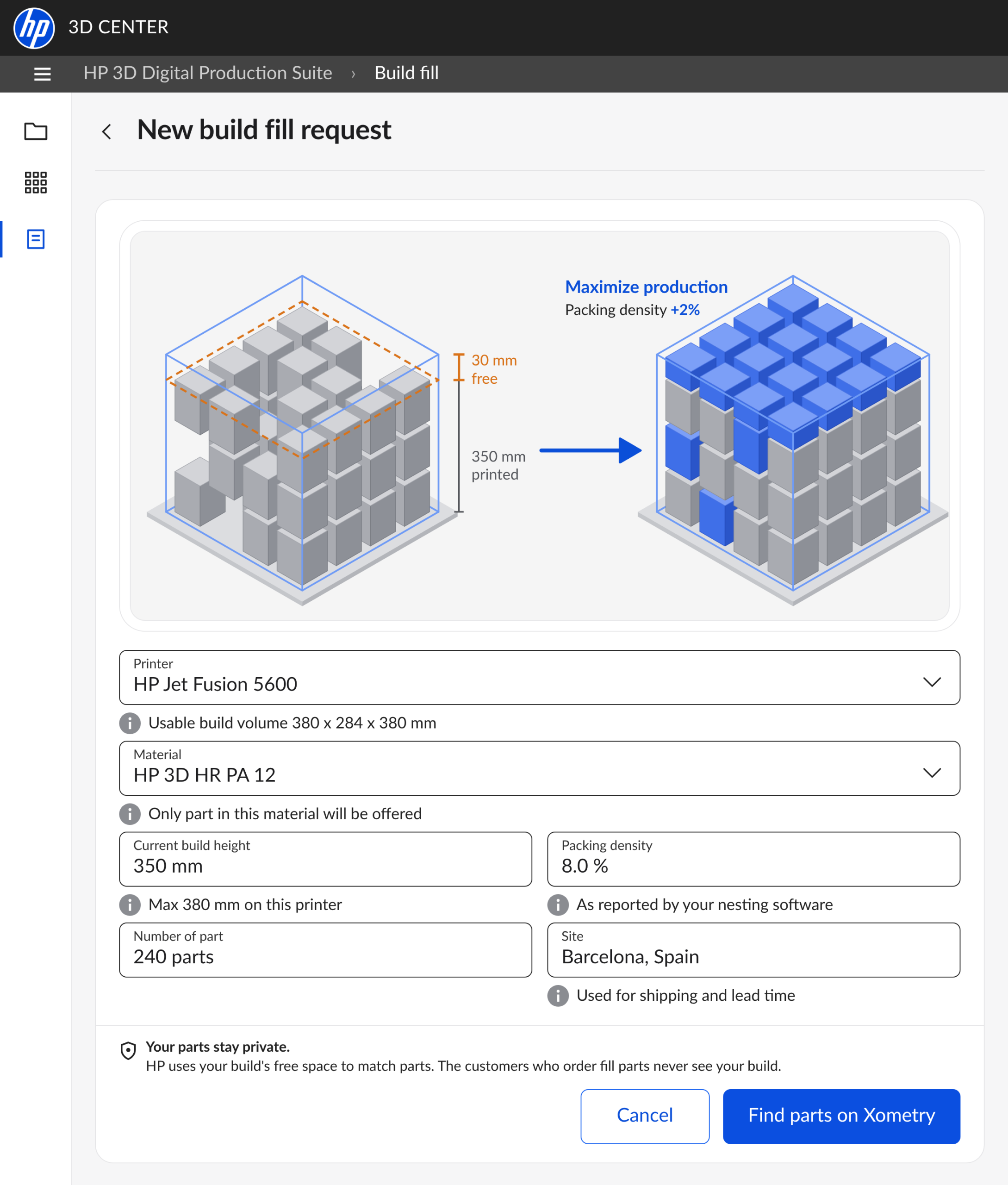
Global AI-native marketplace Xometry has announced a significant collaboration with HP, integrating HP’s Multi Jet Fusion (MJF) build-planning software directly into Xometry Workcenter. This strategic move allows manufacturers within Xometry’s extensive partner network to fill previously unused space in their MJF builds with Xometry orders. The announcement, made at Formnext in Frankfurt on November 17, 2026, signals a new era of efficiency for additive manufacturing. The integration is slated for a U.S. launch in early 2027, with European rollout to follow, exclusively for Xometry Partner Network manufacturers utilizing HP MJF systems.
Table of Contents
The primary objective of this integration is to dramatically increase build yield and minimize material waste. Xometry anticipates that this enhanced utilization will directly translate into faster turnaround times and more competitive pricing for customers ordering MJF parts through its marketplace. This advancement represents a crucial step in leveraging data intelligence at the point of production.
Maximizing Production Capacity Through Intelligent Nesting
The core innovation lies in addressing the open space typically left within an MJF build after a partner’s primary jobs are arranged. HP’s software, when planning a build, optimizes the layout and precisely identifies this remaining free volume. Xometry Partner Network manufacturers can then seamlessly search for and accept suitable orders from Xometry Workcenter that fit these identified gaps.
This collaboration is structured around three key pillars. Firstly, orders will be intelligently matched with available production capacity across Xometry’s network of HP MJF partners. Secondly, combined data from HP and Xometry will be utilized to configure builds, ensuring partner machines operate at peak efficiency. Xometry orders will be strategically inserted into existing builds to shorten delivery timelines and improve overall cost-effectiveness.
Thirdly, the improved matching algorithms and fuller builds are designed to significantly shorten the entire production pathway, from digital file to delivered part. This streamlined process promises customers faster receipt of their MJF parts and more attractive pricing. The outcome is a more efficient and profitable manufacturing ecosystem for both customers and production partners.
Xometry and HP: A Synergistic Approach to Additive Manufacturing Scale
Sanjeev Singh Sahni, CEO of Xometry, emphasized the strategic importance of this integration, stating, “With HP, Xometry’s intelligence reaches build planning, right before parts go on the machine.” He highlighted how this brings partners greater value from each build and offers customers faster, more affordable MJF parts. Sahni reiterated Xometry’s mission to democratize global manufacturing capacity, positioning HP as a key partner in extending this intelligence.
Alex Monino, SVP and GM of Additive Manufacturing Solutions at HP, echoed this sentiment, focusing on the scalability of additive manufacturing. “For additive manufacturing to scale, we need to make every production run as productive and economically efficient as possible,” Monino stated. He believes that connecting HP MJF build intelligence with Xometry’s digital platform will empower production partners to maximize build utilization, cut material waste, and respond more rapidly to market demands.
This partnership exemplifies HP’s strategy of integrating technology, software, and ecosystem collaborations to extract maximum value from additive manufacturing. The focus on MJF build optimization is critical for driving wider adoption and economic viability in the sector.
Pushing Marketplace Data Into Production Planning and Future Outlook
This HP integration is the latest in Xometry’s ongoing strategy to embed its extensive data intelligence into third-party software platforms. Earlier in 2026, Xometry announced a similar strategic partnership with Siemens, integrating its manufacturability, pricing, sourcing, and execution intelligence into the Siemens Xcelerator platform. This strategic push has coincided with strong financial performance, with Xometry exceeding a $1 billion annualized revenue run rate in Q3 2026.

HP has itself been actively developing tools to enhance MJF build density. The launch of the HP 3D Build Optimizer at Formnext 2024, for instance, led early user Forecast 3D to project a 20% reduction in total build costs. Furthermore, third-party developers are creating complementary solutions, such as the Phasio and Dyndrite workflow for automated build preparation, and AMIS Pro software, which reportedly nests 1500 parts in an MJF Build Box with 14% nesting density in under a minute.
While many existing MJF tools focus on optimizing a shop’s existing job queue, Xometry’s integration uniquely addresses the challenge of filling residual build space with external demand. This innovative approach to MJF build optimization is poised to redefine efficiency standards in the additive manufacturing industry, potentially unlocking significant revenue streams for partners and cost savings for customers. The ongoing advancements in software and data integration, similar to how NVIDIA cuDSS 1.0 unlocks engineering solver speeds, highlight the accelerating pace of innovation in technical computing and manufacturing.
The integration is expected to significantly impact the efficiency and cost-effectiveness of producing parts via HP’s Multi Jet Fusion technology. By intelligently filling every available space within a build, both Xometry and HP are driving the additive manufacturing industry towards greater industrialization and broader market acceptance.
Source: 3D Printing Industry