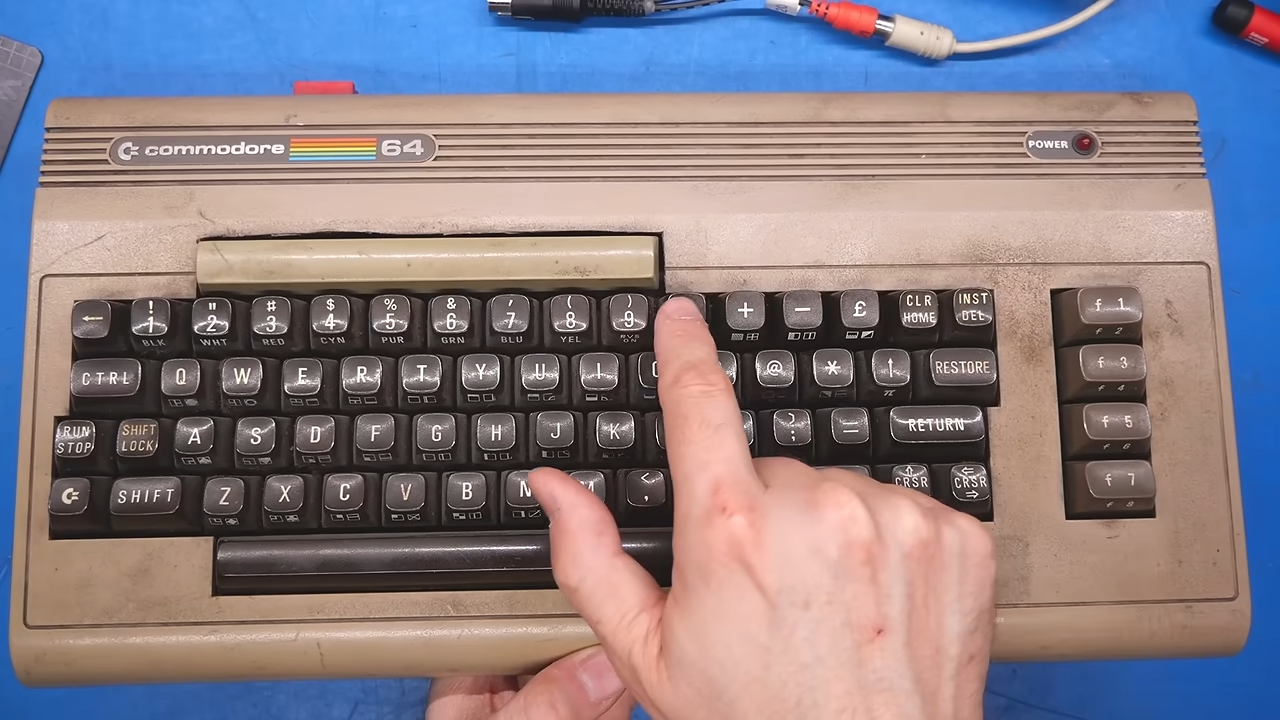
The Curious Case of the Second Spacebar: A Deep Dive into a Unique Commodore 64 Modification
The world of retro computing often reveals fascinating glimpses into user ingenuity and hardware customization. A recent discovery of a heavily modified Commodore 64, complete with an unexplained DIP socket and a perplexing second spacebar, presents a compelling case study in bespoke engineering. This unique Commodore 64 modification challenges conventional keyboard layouts and hints at specialized applications developed decades ago.
Table of Contents
Initial inspection by the owner revealed that both the red DIP socket on the rear and the additional spacebar were meticulously wired into the main keyboard’s printed circuit board. This suggests a deliberate and integrated modification rather than a simple external add-on. The presence of these non-standard components immediately sparks curiosity about their intended function and the user’s specific needs.
Hardware Architecture and Customization
The investigation into this Commodore 64 modification focused on reverse-engineering the custom circuitry. The DIP socket, a common feature for adding functionality or diagnostics, was almost certainly intended as a port for a custom-built numeric keypad. This keypad was likely designed and built by the same individual who performed the keyboard modifications, creating a cohesive, personalized input system.
The most striking element is the second spacebar, positioned unconventionally above the number row. This unusual placement deviates significantly from standard keyboard designs, even those found in specialized hardware. Its integration suggests a functional purpose beyond mere aesthetics, prompting a deeper analysis of its role within the user’s workflow.
Engineering Trade-offs and Functional Enhancements
The purpose of the extra spacebar on this Commodore 64 modification was revealed to be a functional enhancement: it acts as an additional SHIFT key. This ingenious hack allows for one-handed input of symbols typically accessed via the SHIFT key combined with number keys (e.g., $, %, (, )).
By pressing the top spacebar (acting as SHIFT) and then a number key, users could quickly input the corresponding symbol. This two-finger operation, as described by the owner, feels surprisingly natural and significantly streamlines data entry. This design choice indicates a focus on efficiency for tasks requiring frequent symbol input.
The modification cleverly preserves the original keyboard’s functionality. The primary spacebar remains in its standard location, ensuring that normal typing operations are unaffected. This dual functionality highlights the careful planning involved in the modification, aiming to enhance productivity without sacrificing core usability.
Field Readiness and Verdict
The visible wear on the keycaps, particularly the shiny spots on the plastic, is a strong indicator that this Commodore 64 modification saw extensive and regular use. This suggests the user relied heavily on this customized setup for their daily tasks, validating the effectiveness of the design.
The owner speculates that these modifications were likely implemented to support a specific financial application. This theory aligns with the need for rapid numeric and symbol entry, common in accounting, data analysis, or trading software. While definitive proof is elusive, the evidence points towards a practical, user-driven solution for enhanced productivity.
This unique Commodore 64 modification serves as a testament to the creativity and problem-solving skills within the early computing community. It underscores how users adapted and enhanced their hardware to meet specific demands, often long before commercial solutions were available. Such innovations echo the spirit seen in modern advancements, like the speedups achieved with NVIDIA cuDSS 1.0 for engineering solvers, demonstrating a continuous drive for performance optimization.
The case of the second spacebar invites further discussion and speculation. Have you encountered similar custom keyboard modifications or have alternative theories regarding the intended use of this particular setup? Share your insights and experiences in the comments below.
Source: Hackaday Engineering
https://hackaday.com/2026/11/25/the-curious-case-of-the-second-spacebar/