Tesla’s Ambitious Leap: The Driverless Model Y
Elon Musk has announced plans for a radical new iteration of Tesla’s popular Model Y: a fully driverless version designed to transport groups of six or seven people. This announcement, made at the New York Times DealBook Summit, signals Tesla’s continued push into autonomous transportation, aiming to address the need for larger-capacity robotaxis. The introduction of a driverless Model Y represents a significant engineering challenge and a bold market proposition.
Table of Contents
This move comes as Tesla seeks to expand its autonomous offerings beyond the two-person Cybercab. Musk articulated the vision of a vehicle that could serve families or larger groups, a segment currently underserved by single-occupant autonomous pods. The company’s strategy appears to be leveraging existing, successful platforms like the Model Y to accelerate the deployment of new autonomous services.
Engineering and Architecture of the Driverless Model Y
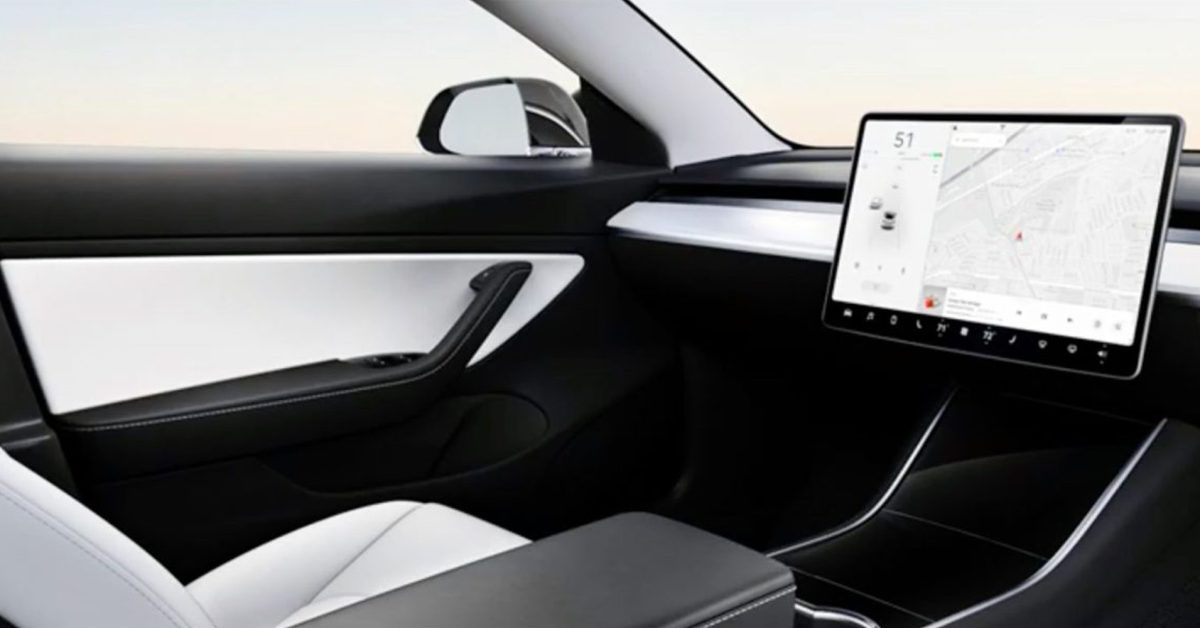
The proposed driverless Model Y builds upon the existing Model Y platform, which has proven successful in the market. The key architectural shift involves the complete removal of the steering wheel and pedals, necessitating a redesign of the driver interface and control systems. This implies a heavy reliance on advanced sensor suites, sophisticated AI for navigation and decision-making, and robust redundant systems to ensure safety.
Tesla’s approach to autonomy has historically focused on vision-based systems, augmented by radar and ultrasonic sensors. For a production vehicle intended for widespread public use without human intervention, the computational power and AI algorithms will need to be exceptionally advanced. This could potentially involve specialized AI chips, similar to those developed for other applications like those seen in advancements for AI chip design, to process the vast amounts of data required for safe operation in diverse environments.
Market Reception and Engineering Trade-offs
Despite the technological advancements, the market reception for a completely driverless vehicle remains a significant question. Consumer studies, such as Cox Automotive’s 2026 Autonomous Vehicle Study, indicate a preference for higher levels of autonomy that still retain the option for human control. Only a small percentage of consumers expressed interest in fully driverless (Level 5) vehicles, with a greater number favoring Level 4 autonomy, which includes a manual override.
Removing traditional controls presents considerable engineering trade-offs. While it simplifies the interior for a dedicated autonomous shuttle, it severely limits the vehicle’s utility outside of geofenced areas or specific service routes. Furthermore, regulatory hurdles are substantial. The Federal Motor Vehicle Safety Standards (FMVSS) typically require features like foot-operated brakes, meaning a vehicle without pedals would likely require specific exemptions or new regulatory frameworks, a process that has already proven complex for autonomous vehicle developers.
Field Readiness and Future Verdict
The operational readiness of a driverless Model Y for widespread consumer use is contingent on overcoming significant technological and regulatory challenges. Tesla’s existing Robotaxi fleet, while functional, still incorporates steering wheels and pedals, suggesting that a fully control-less design is a more advanced step. The company’s past statements have sometimes suggested that autonomy would negate the need for larger vehicles, yet the announcement of a 7-seat driverless Model Y implies a continued demand for such capacity.
Ultimately, the success of the driverless Model Y will depend on its ability to deliver on safety, reliability, and affordability, while navigating a complex regulatory landscape. The market’s current sentiment suggests a cautious approach to fully autonomous vehicles. If Tesla can successfully implement this technology, it could indeed unlock a new segment of the EV market, but the path forward is fraught with technical and consumer acceptance challenges.
Source: Electrek EV & Battery Tech