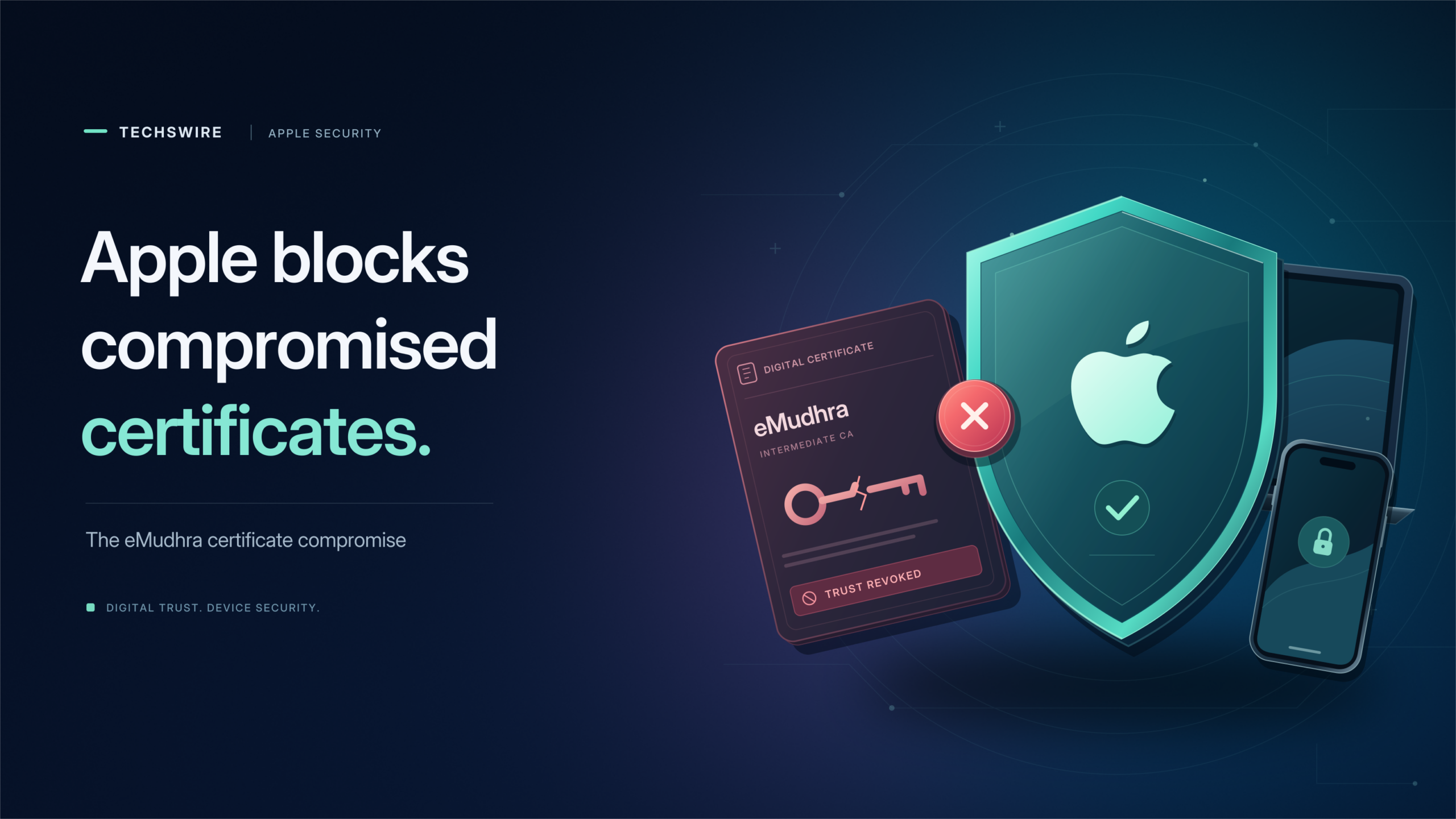
The 10-Second Story: Apple is automatically stopping compromised digital certificates from a company called eMudhra from being used on your devices to keep you safe online.
How It Works (The Big Picture)
Imagine digital certificates are like ID cards for websites and software, proving they are who they say they are.
When the secret information (the private keys) used to create these ID cards is stolen, it’s like a counterfeiter getting their hands on the official stamp.
This allows them to create fake ID cards that look real. Apple, like a vigilant security guard, is now recognizing these fake IDs and refusing to let them through the door, protecting you from potentially malicious sites or software.

The Engineering Under the Hood
- System Mechanics: Apple is automatically blocking 12 specific intermediate Certification Authority (CA) certificates issued by eMudhra. These certificates were found to have compromised private keys. The blocking started on October 19, 2026, and updates are delivered automatically to devices, meaning no manual software update is required for most users.
- Certificate Chains: The compromised certificates are part of a chain of trust. They either chain to ’emSign ECC Root CA – G3′ or are cross-signed by Sectigo and chain to ‘AAA Certificate Services’.
- Impacted Services: For the average user, this means Safari, Mail, and other apps using Apple’s standard security frameworks will automatically reject these compromised certificates.
- Command-Line Tools: For system administrators and developers who use command-line tools like `curl` and `git` via Terminal, these tools might still accept the compromised certificates because they check against a local file (`/etc/ssl/cert.pem`) rather than Apple’s global blocklist.
Vulnerabilities & System Hardening
Threat Vector: The compromise of eight intermediate CAs operated by eMudhra means that an attacker with access to the private keys of six of these CAs could issue fraudulent TLS certificates.
These fake certificates could make malicious websites appear legitimate, potentially leading to phishing attacks or man-in-the-middle exploits.

Defense Mechanism: Apple’s automatic blocking is the primary defense. For command-line tools, administrators have the option to manually remove the compromised root CA certificates from the `/etc/ssl/cert.pem` file to prevent these tools from accepting them before Apple releases a software update that addresses this.
This involves backing up the file, using specific commands to remove the problematic certificate entries, and then potentially restoring the file after future macOS updates if the problematic entries are re-added.

Techswire Bottom Line
Field Readiness: Most Apple users are protected automatically and require no action. System administrators and developers using specific command-line tools should be aware of the potential for these tools to still accept compromised certificates and can take optional steps to harden their systems by modifying the `/etc/ssl/cert.pem` file until a future macOS update is released.