
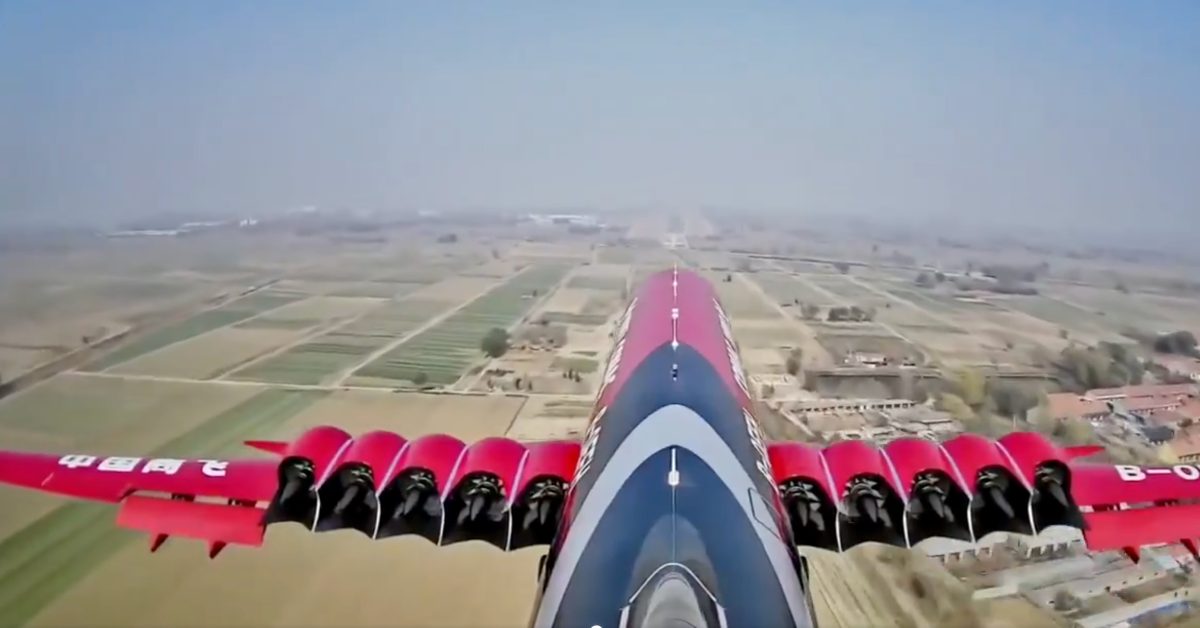
China Electric Airliner Era Dawns with CE-25A Crewed Flight
The dawn of China’s electric airliner era has arrived with the successful first crewed flight of COMAC’s CE-25A. This 19-seat, battery-electric commuter aircraft took to the skies on Saturday in Binzhou, Shandong, carrying two pilots and a flight test engineer. All systems performed nominally during the approximately 10-tonne demonstrator’s flight, signaling a major advancement in sustainable aviation technology.
Table of Contents
This milestone follows 19 previous autonomous test flights conducted since February 2. China’s aviation regulator is now undertaking a thorough review for the aircraft’s type certificate. This rigorous process is essential before the CE-25A can be considered for commercial passenger service, with COMAC yet to announce a definitive timeline.
CE-25A: Architecture, Specs, and 400 km Range
The COMAC CE-25A is engineered as a T-tail commuter plane, distinguished by its unique propulsion system. Instead of traditional propellers, it features ten electric ducted fans seamlessly integrated into the wings, five on each side. COMAC has specified a cruise speed of 300 km/h and an impressive range of 400 kilometers (approximately 250 miles).

The application for a type certificate submitted to the Civil Aviation Administration of China (CAAC) initiates the crucial airworthiness review phase. While this is a significant step, it does not indicate an imminent launch of passenger services. The program, though quiet for a period, resurfaced when COMAC displayed a model at the China International Import Expo in Shanghai in November 2023, listing a range of 400 to 500 km and a top cruise speed of 400 km/h.
Engineering Trade-offs and CATL’s Battery Contribution
A key enabler for the CE-25A’s electric capabilities is likely the advanced battery technology from CATL, a prominent player in energy storage. In July 2023, COMAC, CATL, and Shanghai Jiao Tong University established a joint venture with a registered capital of CNY 600 million, specifically to advance electric aircraft development. This collaboration aligns with CATL’s recent unveiling of its “condensed” battery technology, which claims energy densities of up to 500 Wh/kg at the cell level and is undergoing aviation-specific testing.
While neither company has officially confirmed the battery chemistry powering the CE-25A, the ~500 Wh/kg energy density is widely considered a critical threshold for achieving commercially viable electric flight. This development positions China at the forefront of electric aviation innovation, mirroring advancements seen in other transport sectors like electric freight trucks, where China is rapidly increasing its market share.

Field Readiness and Verdict: A New Frontier in Aviation
COMAC’s CE-25A enters a nascent but rapidly evolving electric aircraft landscape. Competitors like Heart Aerospace have flown demonstrators, though their path to service, targeting 2031, includes reserve turbogenerators for extended range. Eviation’s experience, marked by layoffs, serves as a cautionary tale in the challenging pursuit of electric flight certification and commercialization.
The CE-25A’s 400 km range, while substantial for current battery technology, is practical for regional routes and necessitates adherence to regulatory reserve requirements. This contrasts with conventional turboprops in the same class, which offer significantly longer ranges. However, the trajectory mirrors the electrification of ground transport, which began with short-haul applications before scaling to longer distances. The push towards electric aviation is particularly timely amidst global concerns over volatile fossil fuel prices, such as the recent surge in jet fuel costs, making battery-electric solutions increasingly attractive for reducing operational expenses and environmental impact.
Source: Electrek EV & Battery Tech