CMU200 Custom Firmware: A Deep Dive into Enhanced RF Analysis
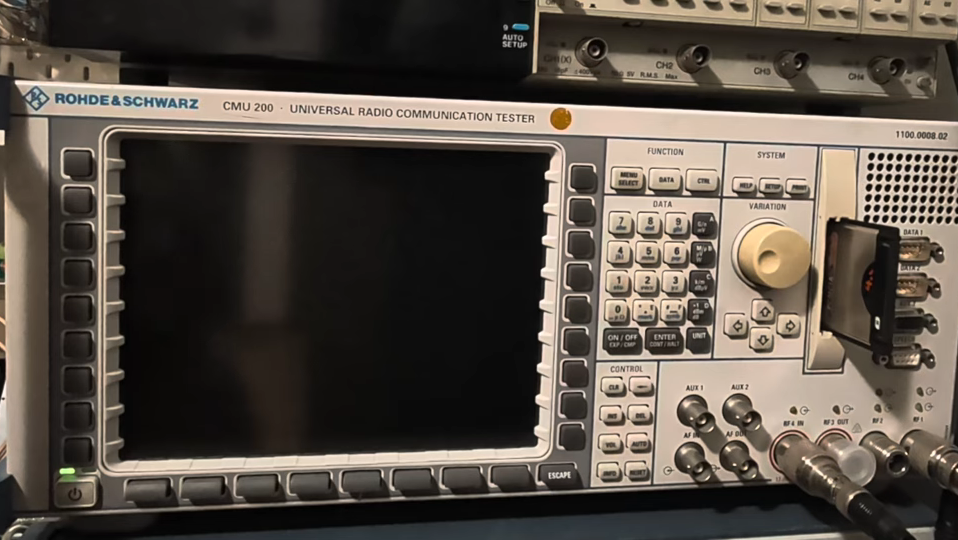
The Rhode & Schwarz CMU200 and CMU300 communications analyzers are robust tools within the RF engineering landscape. However, the drive for enhanced functionality has led to significant advancements, most notably through the development of CMU200 custom firmware. This ambitious project, spearheaded by [iu2frl], dramatically expands the device’s capabilities, transforming it into a more versatile and powerful testing instrument.
Table of Contents
This custom firmware introduces a suite of new features designed to meet the evolving demands of RF professionals and hobbyists. The enhancements aim to provide greater utility and efficiency in various testing scenarios. It represents a significant leap forward in leveraging existing hardware for advanced applications.
Expanded Feature Set and Hardware Architecture
The core of this upgrade lies in the substantial feature expansion. Users can now benefit from a fully functional tracking generator, a crucial component for swept frequency measurements. Furthermore, Wideband FM (WFM) reception with Radio Data System (RDS) decoding has been integrated, opening up new avenues for broadcast analysis.
The firmware also incorporates a comprehensive suite of ham radio test tools, meticulously developed based on the stringent guidelines set forth by the ARRL. This makes the CMU200 an even more valuable asset for amateur radio operators and researchers in the field. The integration of these specialized tools underscores the firmware’s focus on practical, real-world applications.
Networking and Remote Control Capabilities
A pivotal advancement in the CMU200 custom firmware is the robust networking and remote control infrastructure. The implementation includes an integrated FTP server, allowing for easy file transfer and management. Additionally, a VNC server provides seamless remote desktop access, enabling users to control the analyzer from a distance.
Complementing these features is an HTTP server, which further broadens the accessibility and control options. For precise time synchronization, essential in many testing environments, an NTP client is included. These networking capabilities significantly enhance the usability and integration of the CMU200 into modern test setups, akin to how advancements in IoT devices unlock new functionalities.
Installation and Engineering Trade-offs
The installation process for the CMU200 custom firmware is designed to be as straightforward as possible. It primarily involves copying specific files to a storage card and executing a series of commands via an attached USB or PS/2 keyboard. This approach minimizes the barrier to entry for users familiar with embedded system modifications.
However, it’s crucial to acknowledge the inherent risks associated with modifying specialized hardware. The project code, while functional, is distributed with all rights reserved by the author, Luca IU2FRL. It is not an open-source license, meaning unauthorized copying, modification, or redistribution is prohibited. The program includes an activation system tied to the authorized instrument, with a limited demo mode available in the absence of a valid license.
Monetization and Licensing Considerations
The licensing model employed for this custom firmware has sparked discussion within the community. While the author has invested considerable effort in reverse-engineering and unlocking the instrument’s potential, the non-open-source nature and activation system raise questions about accessibility and long-term support. This approach, while potentially necessary for the developer to recoup investment, contrasts with the open-source ethos prevalent in many hardware hacking projects.
The decision to monetize such a project highlights a growing trend in specialized software development. While the functionality offered by the CMU200 custom firmware is undeniably impressive, potential users must carefully consider the licensing terms and activation requirements before proceeding. This model is reminiscent of strategies seen in enterprise software, such as the licensing behind advanced AI infrastructure.
Field Readiness and Verdict
The CMU200 custom firmware represents a significant technical achievement, offering a substantial upgrade to a capable piece of RF test equipment. The added features, particularly the tracking generator, RDS decoding, and comprehensive networking options, make it a compelling proposition for professionals and advanced hobbyists.
Despite the impressive technical execution, the licensing model and the unreadable text in some demonstration materials present potential hurdles. Users must weigh the extensive benefits against the proprietary nature of the software and the need for activation. For those with a clear need for these enhanced capabilities and who are comfortable with the terms, this custom firmware unlocks a new level of performance for the CMU200.
The dedication of [iu2frl] in undertaking such a complex reverse-engineering and development effort is commendable. It showcases the power of community-driven innovation, even when operating under specific commercial constraints. The project ultimately serves as a testament to the potential for extending the life and utility of sophisticated test equipment.
Source: Hackaday Engineering