
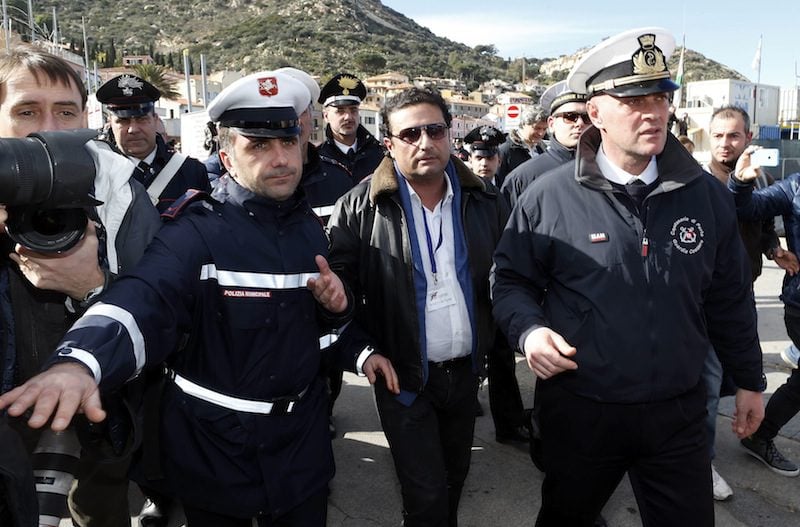
Costa Concordia Captain’s Release Marks End of Nine-Year Sentence
The Costa Concordia captain, Francesco Schettino, has been released from prison after serving over nine years for his role in the tragic 2012 shipwreck. The supervisory court approved Schettino’s request to complete his sentence under social services, marking a significant development in the aftermath of one of modern history’s deadliest cruise ship disasters.
Table of Contents
Schettino, 66, departed Rome’s Rebibbia prison on Friday evening. This release follows a thorough review of his conduct and engagement with rehabilitation programs during his incarceration. The decision reflects a shift towards supervised community reintegration for the remainder of his term.
Engineering Failures and Human Error: The Costa Concordia Disaster
The Costa Concordia disaster occurred on January 13, 2012, when the massive cruise ship struck submerged rocks near the Italian island of Giglio. This collision, attributed to an unauthorized and dangerously close-to-shore maneuver by Captain Schettino, tore a massive gash in the vessel’s hull.
The breach led to rapid flooding and a catastrophic loss of power. The ship, unable to maintain stability, eventually capsized near the island. This led to a chaotic and terrifying nighttime evacuation involving over 4,200 passengers and crew members.
Legal Ramifications and Schettino’s Conviction
Captain Schettino faced international condemnation for abandoning the vessel before the evacuation was fully completed. Investigations also highlighted significant delays in his decision to order passengers to abandon ship, exacerbating the crisis. He was ultimately convicted on multiple charges, including manslaughter, causing a shipwreck, and abandoning ship.
Italy’s highest court upheld his 16-year and one-month prison sentence in May 2017, leading to his immediate imprisonment. The legal proceedings underscored the severe consequences of negligence and dereliction of duty at sea, a principle echoed in maritime safety regulations worldwide.
Supervised Release and Future Obligations
Under the terms of his newly approved release, Schettino will reside in the Campania region of southern Italy. He is mandated to work eight hours daily in an administrative role for a private employer. Additionally, he must complete weekly volunteer work and adhere to strict movement restrictions, including an overnight curfew.
Good-conduct credits have accelerated his projected sentence completion date to July 2030, nearly two years earlier than initially anticipated. This supervised release program aims to facilitate his reintegration into society while ensuring accountability for his past actions. The Costa Concordia disaster remains a stark reminder of the critical importance of robust safety protocols and responsible leadership in maritime operations, much like the meticulous planning required for systems such as swimming pool automation where precise control is paramount.

Legacy of the Costa Concordia and Maritime Safety
The Costa Concordia disaster remains etched in maritime history, prompting significant reviews and enhancements in cruise ship safety regulations. The complex salvage operation, which saw the wreck righted in 2013 and refloated in 2014 before being towed for dismantling, stands as a testament to engineering ingenuity and large-scale project management.
Schettino’s release, occurring shortly before the 15th anniversary of the disaster, brings a close to a significant chapter of this maritime tragedy. It highlights the long-term implications of such events and the evolving nature of justice and rehabilitation within the legal system.
Source: gCaptain Maritime Tech