US Targets Financial Networks Behind Iran’s Oil Trade
The U.S. Treasury Department has escalated its economic pressure on Iran by announcing new sanctions targeting the intricate financial networks that sustain the nation’s oil exports and tanker fleet. This latest action, dubbed Operation Economic Outcast, designates 22 entities and eight individuals accused of facilitating billions of dollars in transactions through Iran’s international financial channels.
Table of Contents
Unlike previous sanctions rounds that primarily focused on physical assets like tankers and shipping companies, these new measures are designed to cripple the financial infrastructure enabling Iran to generate oil revenues and procure essential maritime services. This strategic shift aims to choke off funding streams despite existing U.S. restrictions.
Financial Infrastructure Under Scrutiny
Among the key entities designated is Dubai-based OGA General Trading LLC. The Treasury Department stated that this company played a significant role in processing millions of dollars in payments for the National Iranian Tanker Company (NITC), Iran’s state-owned oil tanker operator. This highlights the U.S. focus on intermediaries enabling sanctioned entities.
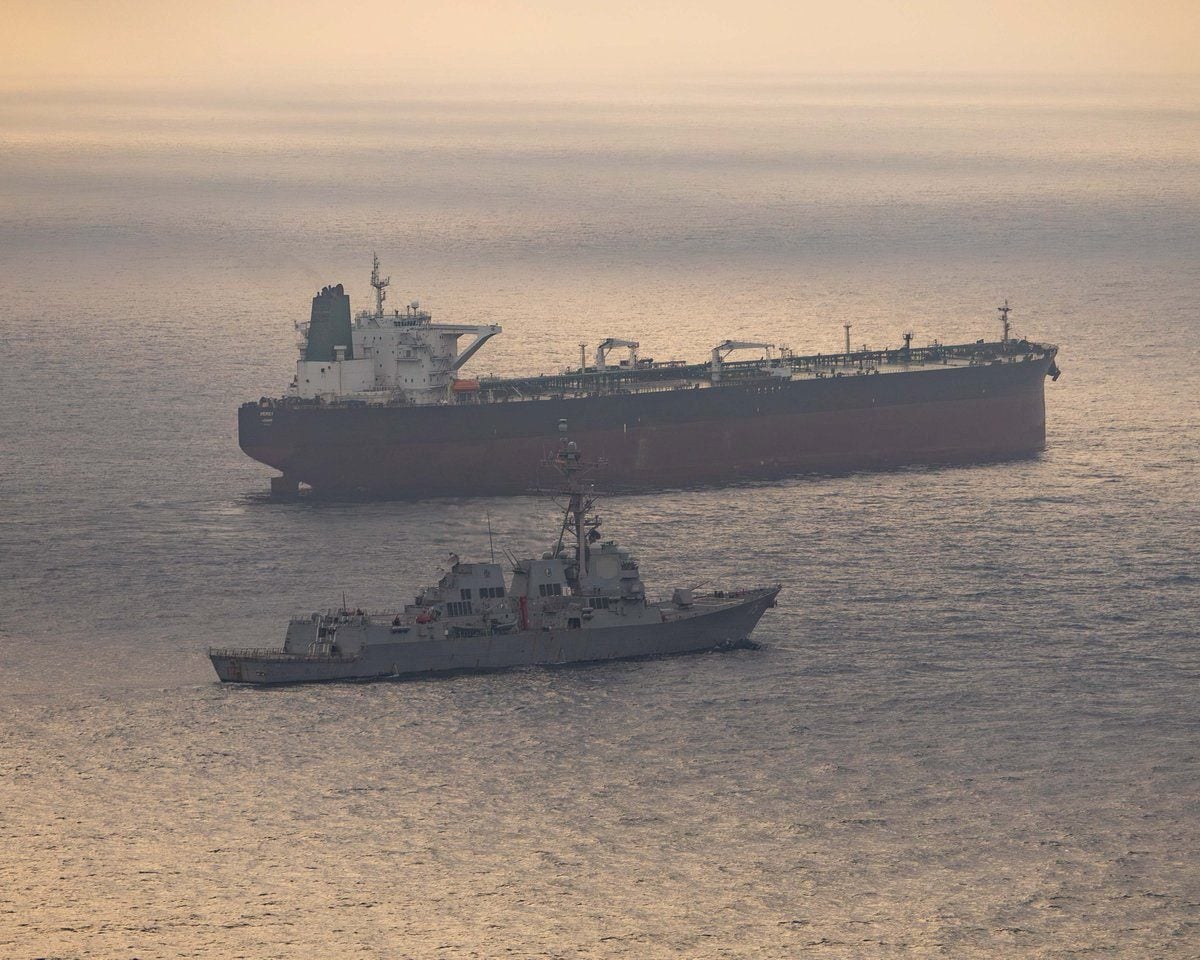
Further underscoring the breadth of the operation, a tanker chartering arrangement involving the vessel SERENE I (IMO 9197832) was also identified. Dubai-based H N B Trading Co LLC reportedly facilitated payments for this charter. The transaction involved Sepehr Energy Jahan Nama Pars Company, an entity linked to the Iranian military, and the already sanctioned shipping firm Dragon Road Ltd.
Other targeted companies include Dubai-based Gespl International General Trading LLC, accused of facilitating oil and petrochemical sales for the National Iranian Oil Company. Integral Petro Energy Trading LLC is also named for allegedly processing millions of dollars in liquefied petroleum gas sales involving Kharg Petrochemical Company.
Central Exchange and Currency Flows
The sanctions also extend to the Iran Center for Exchange of Currency and Gold. The Treasury Department described this institution as a critical hub connecting Iranian exporters seeking foreign currency with importers needing funds for international purchases. This center is reported to handle tens of billions of dollars in annual trade, including transactions denominated in Chinese yuan and Russian rubles.
This comprehensive approach to imposing Iran oil sanctions aims to isolate Iran economically. The effectiveness of such financial pressure can be compared to how advancements in areas like GPU-accelerated DuckDB are unlocking significant speedups in data processing, demonstrating how targeted technological or financial infrastructure improvements can yield substantial gains. The U.S. strategy here is to achieve a similar, albeit negative, acceleration in economic disruption for Iran.
Operational Impact and Future Implications
This latest action follows closely behind claims by the Treasury Department that no Iranian oil has been loaded onto vessels since Operation Economic Outcast commenced on August 24. Furthermore, the department asserted that no Iranian oil remains afloat outside the U.S. military blockade, suggesting a significant impact on Iran’s illicit oil exports.
Under existing U.S. sanctions regulations, any assets belonging to designated entities that fall within U.S. jurisdiction are immediately blocked. Moreover, foreign financial institutions that facilitate transactions involving these sanctioned entities risk facing additional penalties and exposure, creating a chilling effect across international finance.
The success of these financial sanctions will depend on the continued vigilance and enforcement by the U.S. Treasury and its international partners. Disrupting these financial arteries is a critical component of the broader strategy to curb Iran’s illicit activities and influence.

Engineering Trade-offs in Economic Warfare
The implementation of such extensive financial sanctions involves complex trade-offs. On one hand, the U.S. aims to maximize economic pain for Iran, thereby influencing its behavior. This requires precise targeting to avoid collateral damage to legitimate global trade or unintended consequences for regional stability.
The challenge lies in identifying and sanctioning every entity and individual involved in these complex, often opaque, financial schemes. Iran, in turn, continuously seeks new methods to circumvent these measures, creating an ongoing cat-and-mouse game. This dynamic mirrors the constant evolution seen in cybersecurity, where defenses must adapt to new threats, much like how advancements in areas like Sovereign AI Compute are being developed to ensure global control over critical digital infrastructure.
Field Readiness and Verdict on Financial Pressure
The Treasury Department’s assertions suggest a high degree of success in disrupting Iran’s oil export operations since Operation Economic Outcast began. The targeting of financial networks, rather than just physical assets, represents a more sophisticated and potentially more effective phase of economic pressure.
The verdict on the long-term effectiveness of these Iran oil sanctions will hinge on Iran’s ability to adapt its financial strategies and the willingness of other nations to cooperate or at least refrain from facilitating these illicit transactions. The U.S. has demonstrated a clear commitment to dismantling the financial backbone of Iran’s oil trade, signaling a sustained campaign of economic pressure.
Source: gCaptain Maritime Tech