
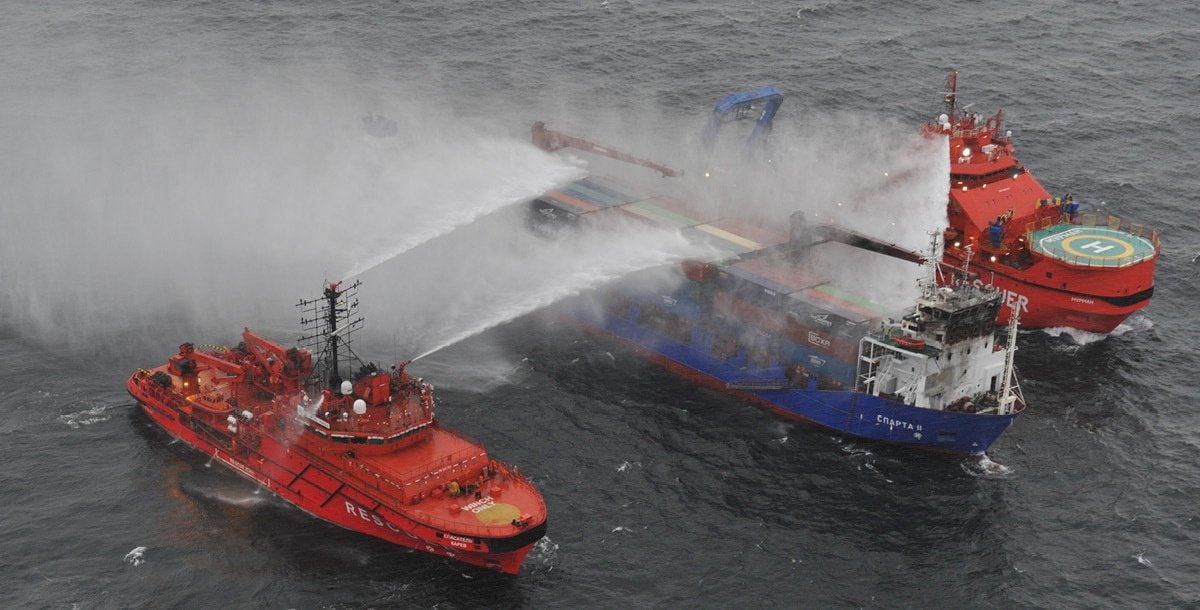
Russian Military Logistics Ship Sparta II Damaged in Drone Strike
The Russian cargo ship Sparta II, a key asset in Russian military logistics, sustained significant damage after a suspected Ukrainian drone attack in the Gulf of Finland. Following a multinational firefighting operation, the vessel has been towed out of Finnish waters, as confirmed by Finnish President Alexander Stubb. This incident underscores the escalating maritime security concerns in the Baltic Sea region amidst the ongoing conflict.
Table of Contents
The Sparta II’s departure occurred despite a temporary sanctions-related restriction imposed by Finnish authorities. The vessel was identified as belonging to a company subject to European Union sanctions, complicating the immediate response. President Stubb highlighted the severe danger the damaged ship posed to the Gulf of Finland, stating, “Unfortunately, the consequences of Russia’s war of aggression are also visible in our region.”
Incident Overview and Technical Details
The Russian-flagged cargo ship, measuring 121 meters in length, was attacked by drones while traversing international waters west of Russia’s Gogland Island. The vessel was en route from St. Petersburg to Kaliningrad, a critical Baltic port. The drone strike ignited a fire aboard the ship, leading to a loss of maneuverability and causing it to drift into Finnish territorial waters near Loviisa.
All 16 crew members were successfully evacuated to another Russian vessel, with one reportedly sustaining minor injuries. Finnish defense officials have assessed that Ukraine was likely responsible for the attack, though Kyiv has not officially claimed responsibility. The nature of the drones used and the specific targeting strategy remain subjects of ongoing analysis.
Sanctions Complications and Rescue Architecture
Finland’s National Enforcement Authority confirmed an investigation into the vessel’s connections to sanctioned entities. The Sparta II is operated by Oboronlogistika, a Russian shipping company with ties to the country’s Ministry of Defense, known for transporting military cargo. This connection placed the vessel under EU sanctions, triggering a temporary enforcement measure prohibiting its release.
However, the measure included specific exceptions for maritime rescue operations, safety, and the reduction of environmental risks. Finnish authorities ultimately permitted the damaged ship to be towed away, prioritizing the mitigation of risks associated with its presence in Finnish waters. This decision reflects a pragmatic approach to maritime safety, balancing sanctions enforcement with immediate operational necessities.
The multinational firefighting response involved coordinated efforts from Finland, Estonia, and Russia. The Finnish Border Guard reported that the Russian rescue vessel Murman initiated the towing operation on Sunday, supported by the Finnish patrol vessel Uisko, the Estonian Navy’s Kindral Kurvits, and rescue tugs from Alfons Håkans. Thermal imaging indicated that some containers remained hot, but external flames were extinguished.

Field Readiness and Geopolitical Implications
The Sparta II incident highlights the increasing spillover of the Russia-Ukraine war into the Baltic Sea. Attacks targeting Russian military and logistics assets have become more frequent, often occurring in close proximity to NATO territory. This pattern raises significant concerns about regional stability and the potential for escalation.
The Kremlin has accused Ukraine of engaging in terrorist activities in the Baltic Sea and urged regional countries to discourage further attacks. This event also brings to light the complexities of enforcing sanctions in a dynamic maritime environment, where humanitarian and safety considerations can necessitate temporary waivers. The operational readiness of such Russian military logistics assets remains a critical point of observation for Western intelligence agencies.
The successful, albeit complicated, rescue and towing operation demonstrates the importance of international cooperation in managing maritime emergencies, even amidst geopolitical tensions. The incident serves as a stark reminder of the interconnectedness of global supply chains and the vulnerabilities inherent in maritime transport, especially when linked to military operations. For insights into how advanced controllers can manage complex systems, consider the ESP32-S3 controller in swimming pool automation, showcasing sophisticated control in demanding environments.
Source: gCaptain Maritime Tech
