Raspberry Pi Emergency Kit: A 3-Day Survival Tech Breakthrough
The UK government’s ‘Be Ready’ campaign prompts citizens to prepare for three-day self-sufficiency, outlining essentials like water, food, and a torch. However, for the technically inclined, the Raspberry Pi emergency kit offers a significant upgrade, ensuring vital digital resources remain accessible even when conventional infrastructure collapses.
Table of Contents
This innovative setup transforms a humble Raspberry Pi into a private, offline information hub. It provides access to essential data, entertainment, and even a private Wi-Fi network, demonstrating a critical advancement in personal preparedness technology.
Hardware and Software Architecture for Offline Resilience
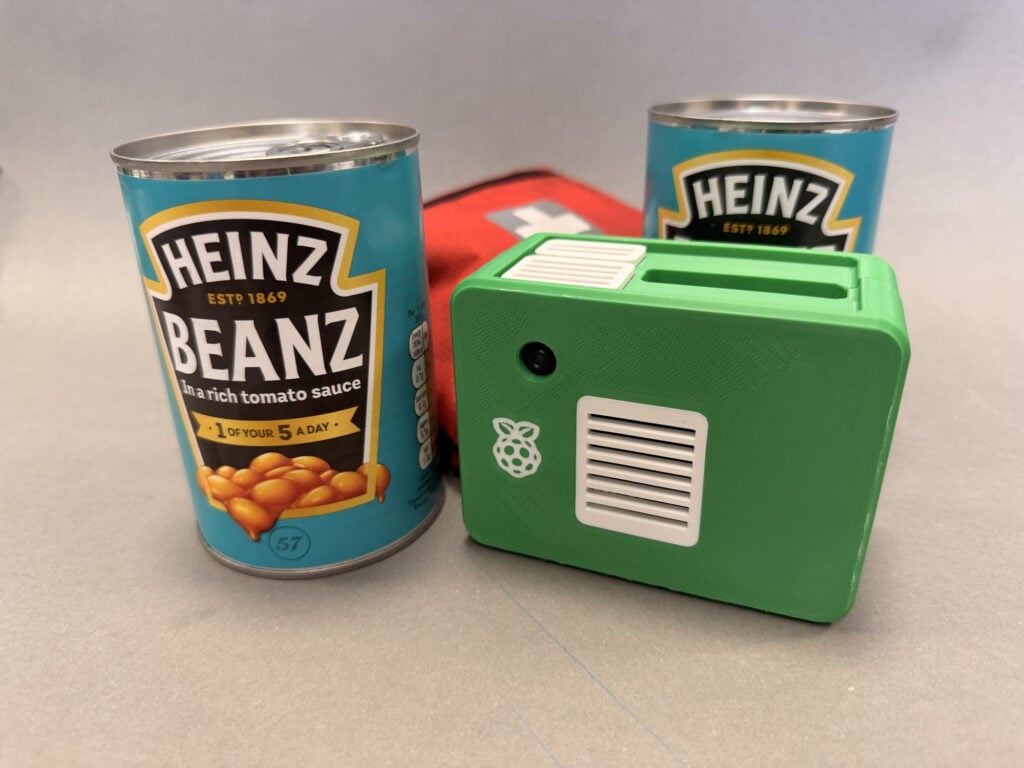
At its core, the system utilizes a Raspberry Pi 5, equipped with an NVMe drive for enhanced storage and an AI Camera for intelligent sensing. The router’s status serves as the primary sensor; the Raspberry Pi continuously pings it, detecting power outages within minutes.
Upon detecting a power cut, the Raspberry Pi enters a power-saving mode and activates its own Wi-Fi hotspot. This creates a localized network, allowing other devices to connect and access a curated set of offline resources. This architecture ensures critical data remains available, a key feature for any robust emergency system.
Essential Offline Content and Communication Capabilities
The Raspberry Pi emergency kit hosts a wealth of offline content, including the entirety of English Wikipedia (approx. 127GB) via Kiwix, iFixit repair guides, and the NHS medicines A-Z. It also provides offline UK and Ireland maps with a “nearest help” feature, pointing to pharmacies, hospitals, and defibrillators.
Furthermore, the system includes a UK outage guide with advice from official sources like GOV.UK and the NHS. For entertainment, nearly 100GB of public domain films and music from the Internet Archive are available through Jellyfin, combating boredom during extended outages.
Advanced Sensing and Data Transcribing with SDR
Two Nooelec NESDR SMArt v5 radio sticks extend the Raspberry Pi’s capabilities, enabling it to tune frequencies from 100kHz to 1.75GHz. One stick streams local FM radio to connected phones, and crucially, records and transcribes hourly news using whisper.cpp on the Raspberry Pi’s CPU.
This transcription allows users to search news content for specific keywords, such as “school” or “water.” The second SDR stick monitors aircraft, providing an ambient awareness indicator; a quieter sky than usual can signal broader global disruptions, a vital piece of situational intelligence.
Engineering Trade-offs and Power Limitations
While the Raspberry Pi emergency kit offers significant advantages, it faces inherent limitations. The system’s reliance on power means a dedicated solar-powered battery box is essential for extended operation. This unit contains a 12.8V 10Ah LiFePO4 battery and a 10A solar charge controller.
The current setup provides approximately 16 hours of operation on battery alone, with a 100W solar panel capable of recharging the battery in a few sunny hours. However, performance diminishes significantly in winter, with a grey December day providing only about a quarter of the necessary power. A larger battery remains a desirable upgrade for improved winter resilience.
The Role of the Raspberry Pi AI Camera
The integrated Raspberry Pi AI Camera, featuring a Sony IMX500 sensor, performs neural network processing directly on the camera module. This offloads computational tasks from the main Raspberry Pi, delivering processed data rather than raw video streams.

Currently, it supports person detection, potentially functioning as a doorbell during power outages. The camera can also count people, recognize objects, and track poses, offering a versatile tool for monitoring and even engaging activities, demonstrating the potential of edge AI in critical situations.
Field Readiness and Verdict on the Raspberry Pi Emergency Kit
The Raspberry Pi emergency kit is a highly practical project for anyone with a spare Raspberry Pi. While advanced components like an SSD and HAT enhance functionality, a basic setup with a Raspberry Pi 4 or 5 and a large microSD card can still host the OS and Wikipedia. This project exemplifies the versatility of embedded systems, similar to how Linux power is unlocked on devices like the Debian Surface Duo 2.
For optimal performance, a 256GB SD card is recommended for the full Wikipedia, while a text-only version fits on a 128GB card. Installation involves Raspberry Pi OS, Kiwix for content, and configuring a Wi-Fi hotspot. The system is designed to be self-sufficient, but users must prioritize the government’s basic checklist first.
The Raspberry Pi emergency kit serves as a powerful extension, not a replacement, for traditional preparedness measures. It offers a tangible solution for maintaining access to critical information and connectivity when it matters most, embodying the spirit of self-reliance and technological ingenuity.
Source: Raspberry Pi News