
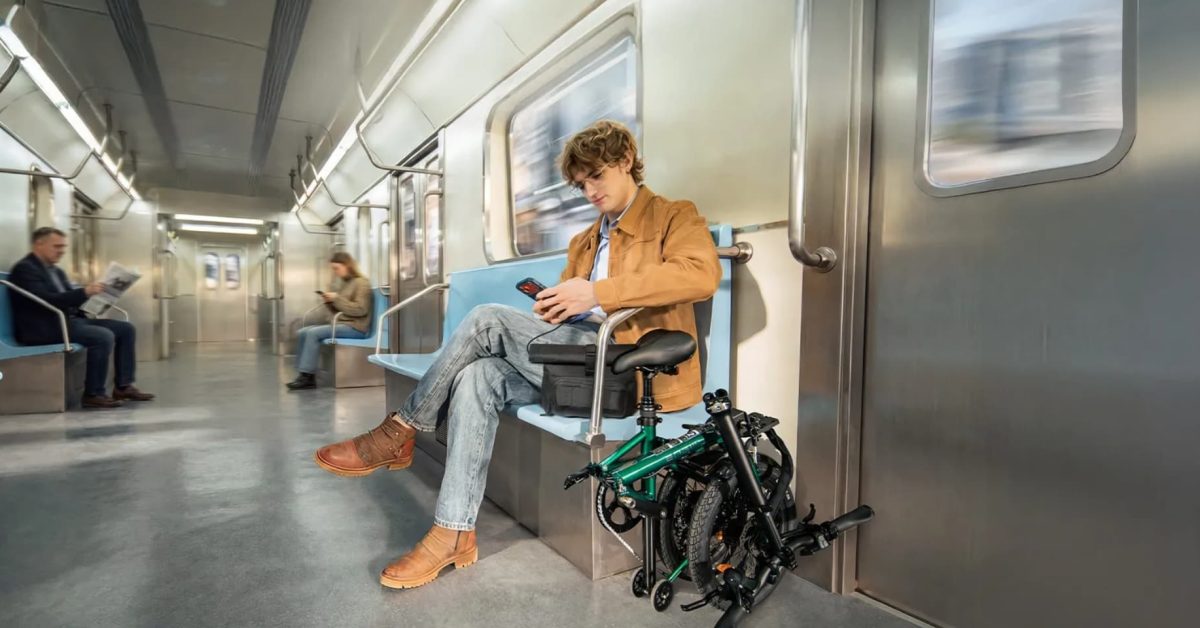
Revolutionary USB-C Charging E-Bike Emerges at a Fraction of the Cost
The long-awaited integration of USB-C charging into electric bikes has finally arrived with the ENGWE Zip, a groundbreaking model that redefines affordability in personal electric mobility. This innovative e-bike offers the convenience of universal charging, utilizing the same USB-C ports found on most modern smartphones and laptops. It represents a significant leap forward, particularly when compared to premium alternatives that have entered the market at substantially higher price points.
Table of Contents
The ENGWE Zip, priced at a remarkable €999 (approximately US$1,100), directly challenges the market by offering its core functionality at roughly 25% of the cost of its closest competitor. This significant price disparity makes advanced charging technology accessible to a much broader consumer base, signaling a potential shift in the e-bike industry’s approach to user convenience and cost-effectiveness.
ENGWE Zip: Architecture and Specifications
At its core, the ENGWE Zip is a compact, 16-inch wheel folding electric bike designed for portability and ease of use. Its standout feature is the integrated USB-C charging system, which eliminates the need for proprietary power bricks. Users can leverage existing laptop or phone chargers, simplifying travel and reducing clutter. This approach is particularly beneficial for frequent travelers or those who visit friends and family, as compatible chargers are increasingly ubiquitous.

The bike features a 360Wh battery housed within a secure, lockable roll-top bag attached to the headset. This design allows for easy removal for off-bike charging, while the keyed lock ensures battery security even when mounted. The battery not only powers the e-bike but also serves as a power source for external devices, boasting dual USB-C output ports. This dual-functionality allows users to charge their laptop or other gadgets directly from the e-bike’s battery, offering unprecedented versatility.
While a standard 20W USB-C phone charger can technically charge the battery, it is not the most efficient method. A more powerful 100W laptop charger can fully recharge the battery in approximately four hours, with a 50% charge achievable in about two hours. This flexibility underscores the primary advantage of USB-C charging: convenience and adaptability, rather than solely focusing on rapid charging speeds.
Engineering Challenges and Limitations
The widespread adoption of USB-C charging in the e-bike sector has been slower than in smaller electronics due to fundamental technical differences. Most e-bike batteries operate at higher nominal voltages, typically 36V or 48V, which exceed the 20V standard supplied by common USB-C laptop chargers. Implementing USB-C charging necessitates additional voltage conversion and specialized charging circuitry within the battery or the bike itself.

The ENGWE Zip demonstrates that these engineering hurdles are surmountable. By integrating the necessary conversion electronics within the battery pack, the company has created a solution that can be adapted by other manufacturers. However, it is important to acknowledge that for larger battery capacities, dedicated high-wattage chargers will likely remain the preferred option for users prioritizing speed. The USB-C functionality on the Zip is positioned as a convenient alternative, not a complete replacement for all charging scenarios.

Field Readiness and Verdict
The ENGWE Zip represents a significant step towards a more integrated and user-friendly electric mobility ecosystem. Its ability to charge via the ubiquitous USB-C standard, coupled with its dual-output capability, offers unparalleled convenience. This innovation is particularly relevant in the context of evolving power delivery standards, much like how advancements in battery technology are being explored for applications such as the Stellantis electric tow dolly.
For an e-bike priced under $1,100, the ENGWE Zip delivers exceptional value and forward-thinking features. While it may not match the high-end specifications of more expensive models, its embrace of USB-C charging addresses a critical user pain point. The author’s experience highlights the practical benefits of having a universal charging solution readily available, making it a compelling option for commuters and recreational riders alike.
The ENGWE Zip’s success suggests that the broader e-bike industry should seriously consider adopting USB-C charging as a standard feature. The convenience of using a single charger for multiple devices, including an e-bike, streamlines the user experience and reduces electronic waste. This move towards standardization aligns with the ongoing trend of making electric transportation more accessible and integrated into daily life.
Source: Electrek EV & Battery Tech