
De:volt: A Breakthrough Web-Based Breadboard Simulator for Engineers
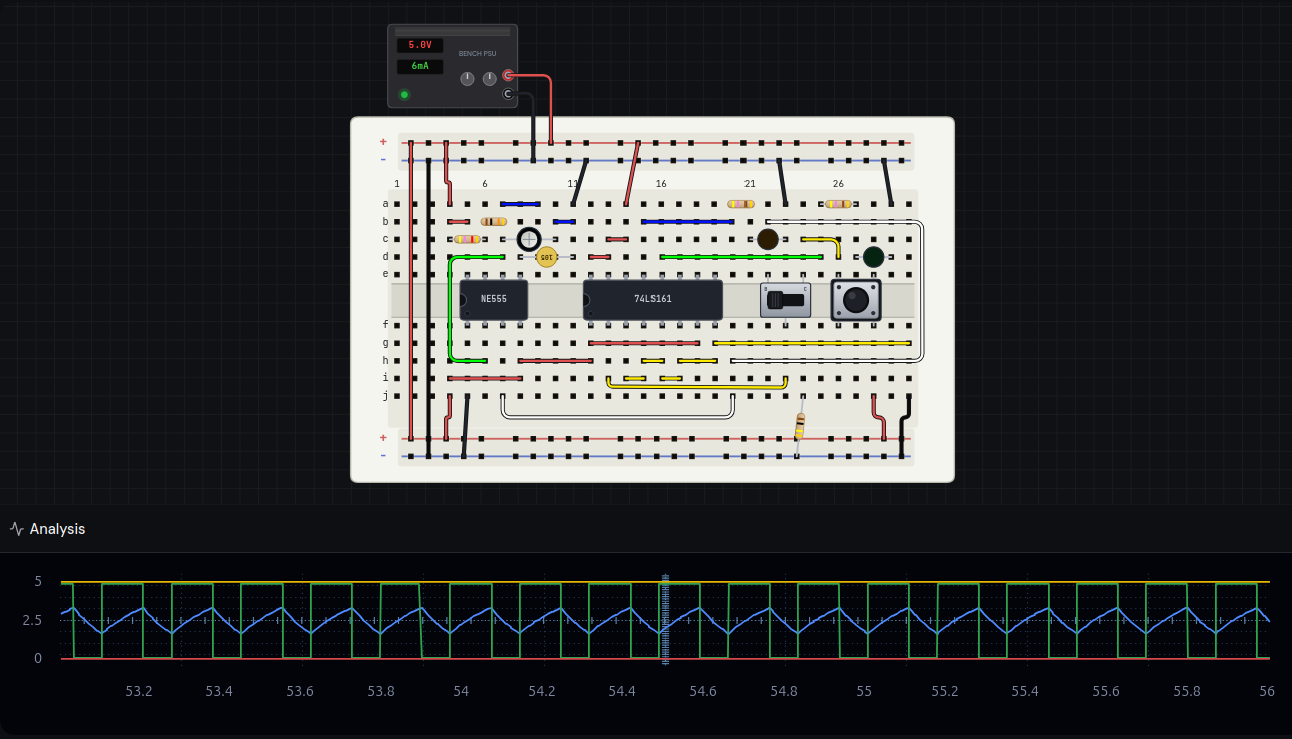
Dev Kapadia’s de:volt emerges as a significant advancement in accessible electronics design, offering a robust web-based breadboard simulator that runs directly within your browser. This innovative tool allows users to construct circuits, identify and rectify errors in real-time, and meticulously monitor circuit behavior using an integrated oscilloscope. The project’s core aim is to replicate the tactile experience and immediate feedback of a physical breadboard, making complex circuit design more intuitive and efficient for both seasoned engineers and aspiring hobbyists.
Table of Contents
The simulator provides immediate feedback on circuit performance, highlighting potential issues such as component burnout due to missing resistors or voltage sag under load. This proactive error detection significantly reduces the time and resources spent on debugging physical prototypes. The ability to simulate and validate designs before committing to hardware is a critical step in modern product development, echoing the need for efficient testing seen in areas like electric vehicle development, such as the Greenworks OPTIMUS UTV.
[[IMAGE: A clean, modern web interface displaying a virtual breadboard with various electronic components like resistors, capacitors, and an MCU board, with an oscilloscope waveform visible on a side panel.]]Hardware and Software Architecture: A Rich Component Library
De:volt boasts an impressive library of 105 electronic components, including essential passive and active elements like resistors, capacitors, diodes, transistors, LEDs, 555 timers, and various logic ICs. It also supports more complex components such as EEPROMs, motor drivers, and sensors, providing a comprehensive toolkit for diverse circuit designs.
Crucially, de:volt integrates support for popular microcontroller boards, including Arduino, BBC micro:bit, and the Raspberry Pi RP2040. Users can write and execute MicroPython code directly within the web interface, enabling the simulation of embedded systems with firmware interaction. This fusion of hardware simulation and firmware development is a powerful combination for rapid prototyping and testing of IoT devices and other embedded solutions.
The simulation engine operates in real-time at a smooth 60 Hz directly in the browser. This live simulation allows for immediate observation of how circuit changes affect performance. The built-in oscilloscope is a standout feature, enabling users to probe and measure various points in the circuit. Premium features further enhance this capability with a logic analyzer, operating point analysis, and advanced simulation sweeps like DC, temperature, and Monte Carlo runs, offering deep insights into circuit behavior under different conditions.
Engineering Trade-offs and Limitations in Simulation
While de:volt offers a compelling feature set, it’s important to acknowledge its limitations compared to dedicated, high-fidelity simulation software or physical prototyping. The browser-based nature, while convenient, means performance can be dependent on the user’s hardware and browser efficiency. The free version provides essential simulation and debugging tools, but advanced features like logic analyzers and AI-driven circuit generation are reserved for premium users.
The project itself is not open-source, though its underlying mixed-signal circuit simulation engine, Brownout, is. Brownout is written in TypeScript and features a modified-nodal-analysis solver capable of co-simulation with AVR and RP2040 microcontrollers. This engine supports thermal, battery, and failure physics, providing a sophisticated foundation for the simulator’s capabilities. However, the integration and user-facing features of de:volt are proprietary.
The simulator excels at breadboard-level circuit testing and validation, aiming to be a faithful representation of physical breadboard behavior. It effectively flags errors like over-dissipation or incorrect voltage application, as demonstrated when a 24V supply was applied to a circuit designed for 5V, causing a resistor to fail. This highlights its utility in preventing common mistakes before they occur in hardware, a principle also vital in ensuring the reliability of critical infrastructure like power grids, where technologies like heat pump efficiency play a role.

Field Readiness and Verdict: A Valuable Tool for Prototyping
De:volt is particularly valuable for testing breadboard projects and validating circuit designs before committing to physical components. Its intuitive interface and real-time feedback loop make it an excellent educational tool for learning electronics and embedded systems programming. The ability to save projects to the cloud, manage version history, and collaborate with others enhances its utility for team-based projects.
While it may not offer the same depth of code development features as specialized simulators like Wokwi, de:volt’s strength lies in its focus on circuit-level simulation and breadboard layout. The seamless integration of a virtual breadboard, component library, and debugging tools provides a powerful platform for rapid iteration and design verification. Users can export designs as PNG images, and premium users gain access to Circuit JSON, Bill of Materials (BoM) exports, and PDF project reports.
The free tier allows users to build circuits and utilize the oscilloscope without mandatory sign-in, with registration only required for cloud saving. This accessibility lowers the barrier to entry for exploring complex electronic designs. For anyone looking to streamline their electronics prototyping workflow and minimize costly hardware errors, this web-based breadboard simulator presents a compelling and practical solution.
Source: CNX Software Embedded