Zimmer Biomet Submits Autonomous Monogram Robot for FDA Clearance
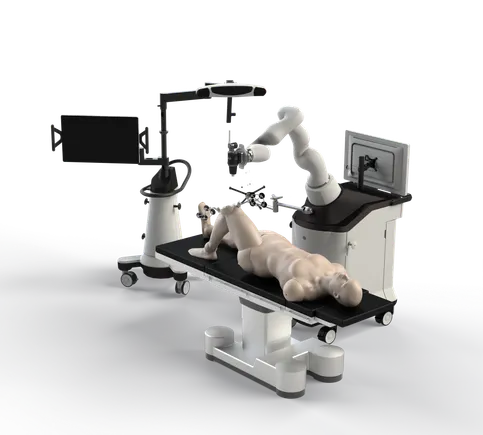
Zimmer Biomet has officially filed for 510(k) clearance with the U.S. Food and Drug Administration for an autonomous iteration of its groundbreaking Monogram orthopedic robot. This pivotal submission marks a significant leap forward in surgical automation, with the company expressing optimism for FDA approval within the next year.
Table of Contents
CEO Ivan Tornos announced the submission, made on Monday, highlighting the company’s anticipation for a 2027 launch. Tornos described the Zimmer Monogram Robot as a “game-changing platform,” emphasizing its potential to revolutionize orthopedic procedures through enhanced safety, superior efficiency, user-friendliness, and pinpoint accuracy.
Monogram Robot: A New Era in Orthopedic Surgery
The development of the autonomous Zimmer Monogram Robot stems from Zimmer Biomet’s strategic acquisition of Monogram Technologies in 2025 for $177 million. The acquired company was already developing a fully autonomous version of its semi-autonomous robot, which was previously utilized in total knee replacement surgeries.
This advanced, hands-free system is designed to be activated via foot pedals, offering surgeons a new level of control and precision. The autonomous capabilities are a significant departure from previous robotic systems, promising a more streamlined surgical workflow.
Technological Advancements and Clinical Validation
A key differentiator for the Monogram robot is its compatibility with CT imaging, a feature not present in Zimmer’s existing Rosa robot. This integration allows for more detailed pre-operative planning and intra-operative guidance, crucial for complex orthopedic interventions.
Clinical trials involving the Monogram robot have reportedly yielded no safety events. Participants noted faster bone preparation and landmarking, which are critical steps in orthopedic procedures. This suggests a robust and reliable system ready for broader clinical application.
The potential impact of this technology is significant. Orthopedic surgeons have expressed optimism about the meaningful time savings, reduced instrument tray requirements, and improved accuracy the robot could offer. The automated bone cutting capabilities, in particular, are expected to alleviate physical strain on surgeons during procedures.
Engineering Trade-offs and Future Limitations
While the Zimmer Monogram Robot represents a significant technological leap, Tornos acknowledged the potential for FDA scrutiny due to its novel nature. “I wouldn’t be surprised if there’s some back and forth with the FDA, given that this is new-to-the-world technology,” he stated.
The 510(k) submission process is typically a 90-day review, but the unique aspects of this autonomous system might extend the evaluation period. Zimmer’s original timeline projected a 2028 launch, but the accelerated submission and potential approval could bring the Zimmer Monogram Robot to market as early as 2027.

The development of such advanced robotic systems often involves complex trade-offs between autonomy, surgeon control, and system adaptability. Ensuring seamless integration with existing hospital infrastructure and surgical protocols will be critical for widespread adoption. Furthermore, the cost-effectiveness and long-term maintenance of these sophisticated machines will be key considerations for healthcare providers.
Field Readiness and Verdict
The successful completion of clinical trials without safety incidents and the positive feedback from surgeons underscore the Monogram robot’s readiness for the market. The technology promises not only to enhance surgical outcomes but also to improve the working conditions for orthopedic surgeons.
As Zimmer Biomet navigates the final stages of FDA review, the industry watches closely. The Zimmer Monogram Robot stands poised to redefine the landscape of orthopedic surgery, offering a glimpse into the future of AI-driven medical interventions. This advancement aligns with the broader trend of integrating sophisticated AI and robotics into critical healthcare applications, much like how AI is revolutionizing data generation for training in fields such as autonomous vehicles and complex simulations, as seen with technologies like the NVIDIA Cosmos Data Factory.
The expected 2027 launch, ahead of initial projections, signals Zimmer Biomet’s confidence in the Zimmer Monogram Robot’s capabilities and its potential to capture a significant share of the growing surgical robotics market.
Source: MedTech Dive