The 10-Second Story: Silicon Wafer Demand Recovery Fueled by AI and Expansion
The global semiconductor industry is witnessing a significant rebound in silicon wafer demand, with forecasts predicting an impressive 11.8% growth in shipments for 2026. This surge is primarily propelled by the insatiable appetite for Artificial Intelligence (AI) applications and a substantial increase in global fabrication plant (fab) capacity expansions. This recovery marks a critical juncture for the sector, moving beyond historical patterns to embrace new technological drivers.
Table of Contents
AI and Expanding Fab Capacity: The Twin Engines of Growth
Artificial Intelligence is emerging as the paramount driver for the escalating silicon wafer demand, with projections indicating its influence will sustain through 2029. The complex computational needs of AI models necessitate advanced semiconductor architectures, directly translating into higher wafer consumption. This trend is further amplified by the robust expansion of global fab capacity. SEMI’s latest outlook anticipates sustained growth in equipment spending beyond 2026, suggesting that ongoing installation and capacity ramp-ups will continue to bolster the need for silicon wafers.
The increasing complexity of semiconductor manufacturing is also evident in the rising sales of process materials. This correlation highlights not only a growth in manufacturing sophistication but also a greater material consumption per wafer. As fabs invest heavily in new production lines, the demand for the foundational silicon wafers intensifies. This unique confluence of factors, particularly the sheer volume of new and upcoming production lines, distinguishes this cycle from previous demand curves.
Navigating Historical Patterns and Future Investment Signals
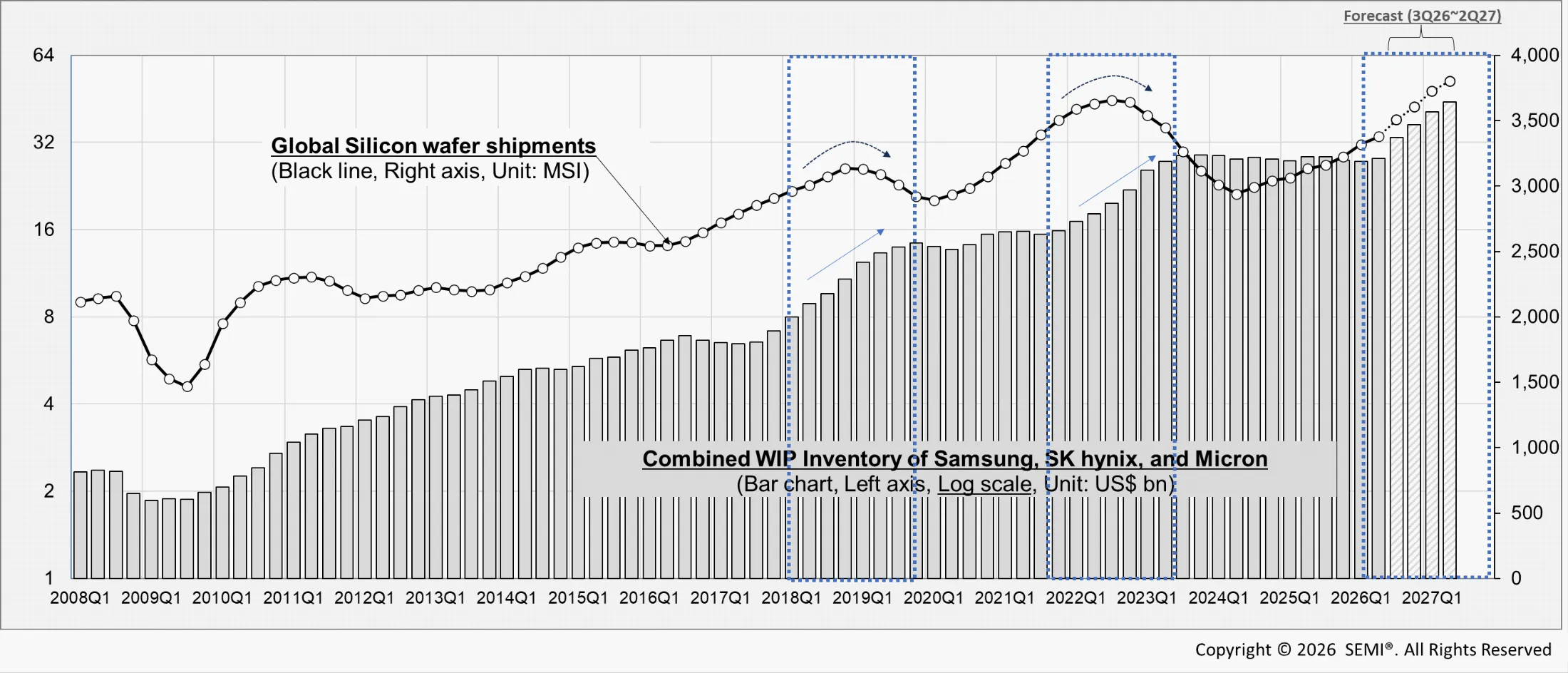
Historically, silicon wafer shipments have shown a lead-lag relationship with memory work-in-process (WIP) inventories. Periods of rising shipments often preceded major increases in WIP, but shipments would then lag as WIP peaked, indicating that fabs operating at full capacity slowed their wafer procurement. However, the current cycle presents a deviation due to the unprecedented number of new production lines coming online.
SEMI’s analysis of fab investment reveals a widening gap between the year-over-year growth rates for general semiconductor fab equipment spending and silicon wafer manufacturing equipment spending. This divergence signals that investment support for wafer demand may persist longer than initially anticipated. While the historical pattern of wafer shipments moderating before WIP inventories peak still holds relevance, the ongoing investment in wafer manufacturing equipment suggests a more sustained demand cycle.
Sustaining Demand Amidst Uneven Recovery and Inventory Management
Looking ahead to 2027, SEMI projects continued, albeit more moderate, growth in wafer shipments. The key to sustaining this demand lies in the efficient absorption of wafers by ongoing production. As inventory stockpiles gradually subside, semiconductor companies can maintain their purchase rates if planned capacity expansions proceed and the resulting chips find strong market demand. This delicate balance is crucial for preventing a resurgence of wafer inventory build-ups.

While AI investment is a critical pillar, the broader semiconductor market recovery remains uneven. The ultimate duration of this recovery period and the depth of any subsequent wafer inventory adjustments will hinge on how rapidly fabs can utilize the wafers they have procured in advance. This dynamic underscores the importance of agile supply chain management and accurate demand forecasting in the evolving semiconductor landscape. For insights into advanced manufacturing processes, exploring innovations like the WASP 3D printing of ceramics offers a glimpse into the diverse material advancements supporting the industry.
The sustained investment in silicon wafer manufacturing equipment, coupled with the transformative impact of AI, provides a strong foundation for continued demand. However, the industry must remain vigilant about market fluctuations and inventory levels to ensure a stable and prolonged recovery. The intricate interplay between technological advancement, manufacturing capacity, and market demand will continue to shape the future of silicon wafer consumption.
Source: Semiconductor Engineering