
Tesla Autopilot Crashes: A Critical Examination of Safety and Solutions
The recent surge in fatal Tesla Autopilot crashes has ignited a critical debate surrounding the safety and efficacy of advanced driver-assistance systems (ADAS). As headlines detail tragic incidents where Autopilot and Full Self-Driving (FSD) were allegedly engaged, the familiar patterns of past accidents resurface, prompting urgent questions about potential preventative measures. While no system is perfect, the ongoing investigation into these events underscores the need for robust safety protocols and technological advancements.
Table of Contents
Electrek’s continuous analysis of NHTSA data has revealed a disturbing trend of fatal crashes linked to Tesla’s ADAS. These incidents, often occurring under specific environmental or operational conditions, draw parallels to earlier accidents, suggesting that solutions might be overlooked or underdeveloped. The complexity of autonomous driving technology means that while crashes garner significant attention, the vast number of incidents successfully averted by these systems often go unrecorded.
Hardware and Software Architectures: Lidar vs. Camera-Only Systems
A key point of contention in the current discourse is Tesla’s reliance on a camera-only approach for its ADAS, a strategy questioned by industry leaders. Companies like Waymo advocate for sensor fusion, which integrates multiple sensor types, including Lidar, radar, and cameras, to create a more comprehensive understanding of the vehicle’s surroundings. This multi-modal approach offers redundancy and enhanced perception capabilities, particularly in challenging conditions like low light, adverse weather, or when dealing with complex road geometries.
Lidar, or Light Detection and Ranging, provides precise depth mapping and object detection by emitting laser pulses and measuring their reflections. This technology offers a significant advantage in accurately determining distances and shapes of objects, complementing the visual data provided by cameras. The integration of Lidar could potentially mitigate risks associated with visual misinterpretations or sensor blind spots inherent in camera-only systems, offering a more robust safety net.
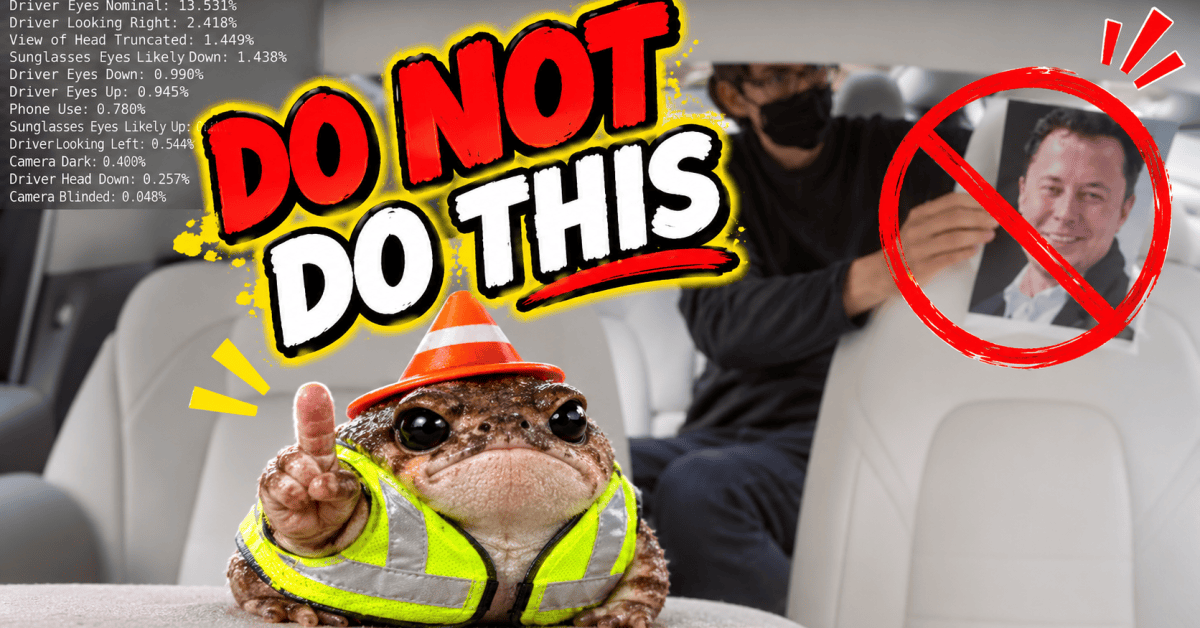
The debate extends to driver monitoring systems, where Tesla has faced scrutiny for varying its enforcement policies between regions. Reports indicate a tightening of FSD monitoring in Europe while simultaneously loosening it in the US. This disparity raises concerns about a globally consistent approach to ensuring driver attentiveness when ADAS is engaged, a critical factor in preventing accidents caused by driver inattention or over-reliance on automation.
Engineering Trade-offs and Limitations in ADAS Deployment
The engineering trade-offs inherent in developing and deploying ADAS are significant. Tesla’s decision to forgo Lidar, likely driven by cost-reduction strategies and a belief in the sufficiency of advanced AI processing of camera data, represents a fundamental divergence from industry norms. While Tesla’s AI has shown remarkable progress, particularly in areas like object recognition, the limitations of a purely visual system become apparent in scenarios requiring precise spatial awareness or operation in conditions that degrade camera performance.
Furthermore, the phenomenon of Tesla owners intentionally engaging in risky behavior while using FSD, often for social media clout, highlights a critical human-factor challenge. This behavior, which includes driving at excessive speeds or disregarding traffic laws, underscores the need for more sophisticated driver monitoring and potentially, stricter operational design domains for the ADAS. The technology’s capabilities must be matched by user responsibility and robust system safeguards.
The development of advanced AI, even in compact forms, is crucial for enhancing the intelligence of these systems. For instance, breakthroughs in creating tiny language models that can fit on minimal hardware, such as those explored in AI research, could eventually lead to more efficient and powerful onboard processing for autonomous vehicles, enabling faster decision-making and improved situational awareness.

Field Readiness and Future Verdict: IONNA and Charging Infrastructure
Beyond the immediate concerns of ADAS safety, the broader ecosystem of electric vehicles (EVs) is rapidly evolving. The introduction of high-power charging solutions, such as those offered by IONNA, is crucial for widespread EV adoption. IONNA’s recent expansion, including a 22-bay site in Westminster, California, and its support for Plug & Charge technology, simplifies the charging experience for EV drivers, including Tesla owners.
IONNA’s commitment to enabling 500 kW EV chargers represents a significant leap forward in charging speeds, drastically reducing downtime for drivers. This next-generation charging infrastructure is essential to alleviate range anxiety and make EV ownership more practical and convenient. As EV technology advances, the supporting infrastructure must keep pace to realize the full potential of electric mobility.
While the headlines surrounding Tesla Autopilot crashes are a stark reminder of the challenges in autonomous driving, the industry is actively pursuing solutions. The integration of advanced sensor technologies like Lidar, coupled with robust AI development and the expansion of high-speed charging networks, points towards a future of safer and more efficient electric vehicles. The path forward requires a holistic approach, addressing both the technological intricacies and the human factors involved in operating these sophisticated systems.
Source: Electrek EV & Battery Tech
