
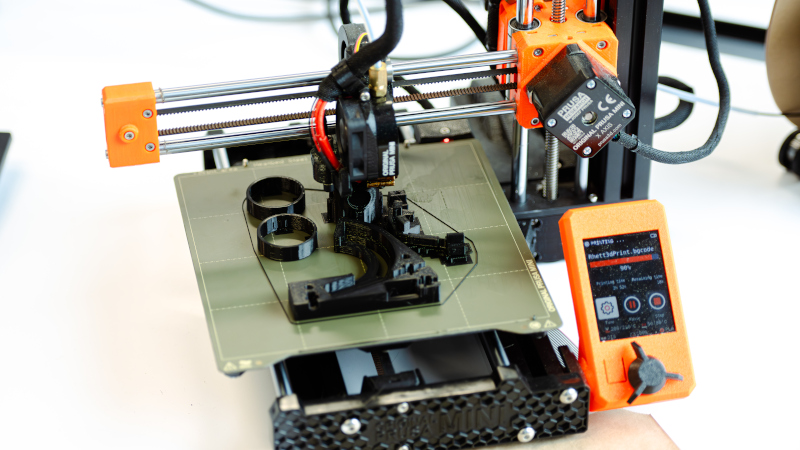
Local Prusa Connect Unlocks Enhanced 3D Printer Autonomy
The evolution of 3D printing has seen a significant shift towards cloud-based services. While some platforms enforce cloud dependency, Prusa has consistently offered a more flexible approach. Now, Prusa is taking user control a significant step further with the release of a local version of its Prusa Connect software, enabling users to run the entire system on their own servers.
Table of Contents
This move directly addresses growing user concerns about cloud reliance and data privacy. The Local Prusa Connect software provides all the benefits of a networked printer service without the inherent ties to external vendors. This offers a more palatable solution for users who may have commercially sensitive projects or simply prefer to keep their operations within their own network boundaries.
Open Source Architecture and Broad Compatibility
The complete codebase for Local Prusa Connect is publicly available on GitHub under the Open Community Licence. This license ensures transparency and accessibility while including specific restrictions for large enterprises, who are directed towards a paid version. This open approach fosters community contribution and allows for thorough security audits.
Pre-built versions of the software are provided for major platforms including Apple, Windows, and Linux, with support for various architectures such as the Raspberry Pi. While the software natively supports Prusa printers, its design is not limited to them. An integrated driver API allows for the addition of non-Prusa printer models, significantly expanding its utility.
Engineering Trade-offs: Privacy vs. Vendor Services
The decision to offer a local version of Prusa Connect is a direct response to the market’s reaction to more heavily cloud-integrated systems, such as those found in some Bambu Lab printers. This shift prioritizes user autonomy and data security over the potential convenience of vendor-managed cloud features.
While the local version offers unparalleled privacy, users might miss out on certain cloud-specific features that require external server infrastructure. However, the inclusion of a driver API for third-party printers demonstrates Prusa’s commitment to flexibility. This approach contrasts with systems that might lock users into a specific ecosystem, offering a more open and adaptable solution for a wider range of users.

Field Readiness and Community Reception
The release of Local Prusa Connect positions Prusa as a leader in user-centric 3D printing solutions. Early feedback suggests a strong positive reception from the community, with users expressing interest in replacing existing solutions like OctoPrint on Raspberry Pi setups. The emphasis on proper camera support, a common pain point with some existing solutions, is also a key consideration for users.
This initiative by Prusa highlights a growing trend towards decentralized and locally controlled IoT devices. As reliance on cloud services continues to be scrutinized, particularly in light of cybersecurity concerns like the recent Optimizely malware attack, options that empower users with direct control are becoming increasingly valuable. The Local Prusa Connect offers a robust, secure, and flexible alternative for the modern 3D printing enthusiast and professional alike.
Source: Hackaday Engineering